
Administrative Tasks Startups Should Automate in 2026
Published: June 27, 2026 · 9–10 min read
TL;DR:
- Automating administrative tasks helps startups save founder time and improve cash flow.
- Focusing on high-frequency, predictable, and high-friction tasks yields the highest automation ROI.
Automating administrative tasks is the single fastest way for a startup to reclaim founder time and protect cash flow. Business process automation transfers 60–70% of structured operational decisions from founders to systems by encoding decision rules and triggers. Without automation, founders spend 6–8 hours per week on administrative overhead alone. The right automation tools for startups cut that to under 3 hours. This guide covers the top administrative tasks startups should automate, ranked by impact, with concrete tools and practical steps for each.
Which admin tasks should you automate first?
Not every task deserves automation on day one. The 80/20 rule applies directly here: a small number of high-frequency, high-friction tasks account for most of your wasted time. Your best automation targets share three traits: they happen often, they follow a predictable pattern, and they pull you away from decisions only you can make.
Start by auditing your week. Write down every task you disliked doing. Founders who skip this step fall into what operations experts call the "Shadow Ops Tax," spending 10 or more hours weekly on low-value admin that a system could handle. That audit reveals your highest-ROI automation targets fast.
Prioritize tasks using this simple filter:
- Frequency: Does it happen daily or weekly?
- Friction: Does it require switching tools, copying data, or chasing people?
- ROI: Does automating it free up founder time or directly improve cash flow?
Email triage, invoice follow-up, and appointment scheduling almost always top the list. Start there before touching anything else.
Pro Tip: Before you build any automation, write out the decision rule in plain English. Example: "If an invoice is overdue by 7 days, send reminder email A. If overdue by 14 days, escalate to email B." Automation built without documented rules breaks constantly.
1. Email inbox triage and routing
Email is the highest-frequency admin task in most startups. Email triage automation reduces handling time per email from 3–5 minutes to 30 seconds. Tools like Gmail filters, Zapier, and Front can auto-label, route, and prioritize incoming messages based on sender, keywords, or subject line. You stop reading every email and start only reviewing what actually needs your judgment.

2. Invoice generation and payment follow-up
Manual invoicing is slow and inconsistent. Tools like QuickBooks, FreshBooks, and Xero generate invoices automatically on a schedule and send payment reminders without any manual input. Automated follow-up matters more than most founders realize. Silence after a missed payment reads as permission to wait. A consistent, automated sequence removes that ambiguity and gets money moving faster.
3. Appointment scheduling and calendar management
Back-and-forth scheduling emails waste time that compounds across a week. AI-powered scheduling tools negotiate calendar availability, send reminders, and manage reschedules without founder involvement. Calendly, Cal.com, and SavvyCal connect directly to your calendar and let clients or prospects book time based on real availability. You get the meeting on the calendar without touching your inbox.
4. Client and employee onboarding workflows
Onboarding is a process that looks different every time when done manually. Automated onboarding provisions accounts, configures settings, and schedules follow-up calls without founder involvement. Tools like Zapier, HubSpot, and Notion combined with a documented standard operating procedure (SOP) turn a 3-hour manual process into a consistent, repeatable workflow. Consistency here also protects your brand: every new client gets the same professional experience.
5. Internal status updates and reporting
Weekly status updates and progress reports are necessary but time-consuming to compile manually. Tools like Notion, Airtable, and Google Data Studio pull data from connected sources and generate reports on a schedule. You set the template once and the system populates it. This matters especially as your team grows: automated reporting keeps everyone aligned without requiring a standing meeting.
6. Social media scheduling and content repurposing
Publishing content manually across LinkedIn, Instagram, and X is a daily time drain. Tools like Buffer, Hootsuite, and Later let you batch-schedule posts weeks in advance. More advanced setups use Zapier to repurpose a single blog post into multiple formats across platforms automatically. You create once and the system distributes.
7. Lead follow-up and CRM data entry
Manual CRM updates are one of the most neglected tasks in early-stage startups. Tools like HubSpot CRM, Pipedrive, and Salesforce capture lead data automatically from web forms, email, and calendar events. Automated follow-up sequences trigger based on lead behavior, not founder memory. This means no lead falls through the cracks because you forgot to send a second email.
8. Financial reporting and spend tracking
Seed-stage startups should centralize payments, banking, and spend tracking to improve cash flow visibility and decision-making. Tools like Mercury, Brex, and Ramp connect directly to your accounts and categorize transactions automatically. You get a real-time view of burn rate and runway without building a spreadsheet by hand each week. That visibility supports faster, more confident decisions.
9. Document processing and contract approvals
Chasing signatures and tracking contract status manually slows deals. Tools like DocuSign, PandaDoc, and HelloSign automate the entire signature workflow: send, remind, track, and archive. You set up a template once and the system handles routing. Contracts that used to take a week to close now close in hours.
10. Customer support ticket triage
Support volume grows faster than headcount in most startups. Tools like Intercom, Zendesk, and Freshdesk auto-classify incoming tickets by topic, urgency, and customer type. Common questions get answered instantly with pre-built responses. Your team only handles tickets that genuinely require human judgment, which keeps response times fast without adding staff.
Pro Tip: Run a monthly review of your support ticket categories. If the same question appears more than five times, it belongs in an automated FAQ response, not in your team's queue.
How to avoid common pitfalls when automating admin work
Automation fails most often because founders buy tools before documenting their processes. SOPs boost efficiency, accountability, and autonomy by giving automation systems clear rules to follow. Without documented decision logic, your automations produce inconsistent outputs and require constant manual fixes.
The second most common mistake is tool hoarding. Successful startups use unified platforms to automate workflows, sharing context across tasks for better efficiency. Buying five separate tools that do not talk to each other creates more overhead than it removes. Prioritize platforms with native integrations or a central hub like Zapier or Make.
The third mistake is removing humans too early. Human-in-the-loop review gates ensure quality, tone, and accuracy align with brand expectations during initial deployment. Run every new automation in "monitor mode" for two weeks before letting it operate fully unsupervised. This catches errors before they reach customers.
Follow these guardrails before launching any new automation:
- Document the decision rule in plain English before touching any tool.
- Test the automation with real data in a sandbox environment first.
- Assign one person to review outputs weekly for the first month.
- Centralize all automation logs in one place so errors are visible.
Tailoring automation to your startup's growth stage
Automation priorities shift as your startup grows. What works at five people breaks at fifty.
-
Seed stage (1–5 people): Remove the founder from the critical operational path first. Automate email triage, invoicing, and scheduling before anything else. The goal is reclaiming founder hours for product and sales.
-
Early growth (6–20 people): Layer in CRM automation, onboarding workflows, and financial reporting. Document every process as an SOP before automating it. This is also when a unified platform like HubSpot or Notion becomes worth the investment.
-
Scaling stage (20+ people): Automate support ticket triage, internal reporting, and contract workflows. At this stage, identify when to hire an operations role versus adding another automation layer. Some decisions require human judgment at scale, and automation cannot replace that.
AI deployment in back-office operations reduces operational costs by 40% and increases employee productivity by up to 66%. Back-office automation yields ROI between 300% and 800%. Those numbers reflect what happens when automation is applied systematically, not just to one or two tasks.
Pro Tip: At every growth stage, ask: "Is this task still worth automating, or does it now need a person?" Automation is not always the answer. Some tasks grow in complexity faster than any tool can handle.
Key takeaways
Automating the right administrative tasks gives startup founders back their time, reduces operational costs, and creates the consistent processes that support growth at every stage.
| Point | Details |
|---|---|
| Start with high-frequency tasks | Automate email triage, invoicing, and scheduling before anything else. |
| Document before you automate | Write decision rules as SOPs so automations run consistently and break less often. |
| Avoid tool hoarding | Use unified platforms with native integrations to share context across workflows. |
| Use human review gates | Monitor new automations for two weeks before letting them run unsupervised. |
| Match automation to growth stage | Seed-stage founders need time back; scaling teams need consistent processes and reporting. |
Why most founders automate in the wrong order
Founders tend to automate the tasks they find most interesting, not the tasks that cost them the most time. I have watched early-stage teams spend weeks building a custom reporting dashboard while still manually chasing invoices every month. That is the wrong order. The highest-value automation targets are almost always the most boring ones: payment follow-up, calendar scheduling, and CRM data entry.
The shift that changes everything is moving from operator-founder to monitor-founder. You stop doing the task and start reviewing whether the system did it correctly. That transition requires trusting your documented rules more than your memory. Most founders resist it longer than they should.
My honest recommendation: do a ruthless weekly audit for one month. Every time you do a task that follows a predictable pattern, write it down. By the end of the month, you will have a clear list of your top ten automation targets. Then build in that order, not based on what looks impressive.
— Tyler
How Interval-ai helps startups automate payment follow-up
One of the highest-friction administrative tasks for any startup is chasing overdue payments. Interval-ai addresses exactly that problem. It uses a data-driven approach to tailor outreach based on historical payment behavior, sending automated follow-up communications across multiple channels without requiring additional staff. Clients report reducing days to payment by over 30 days and saving thousands in payroll costs.
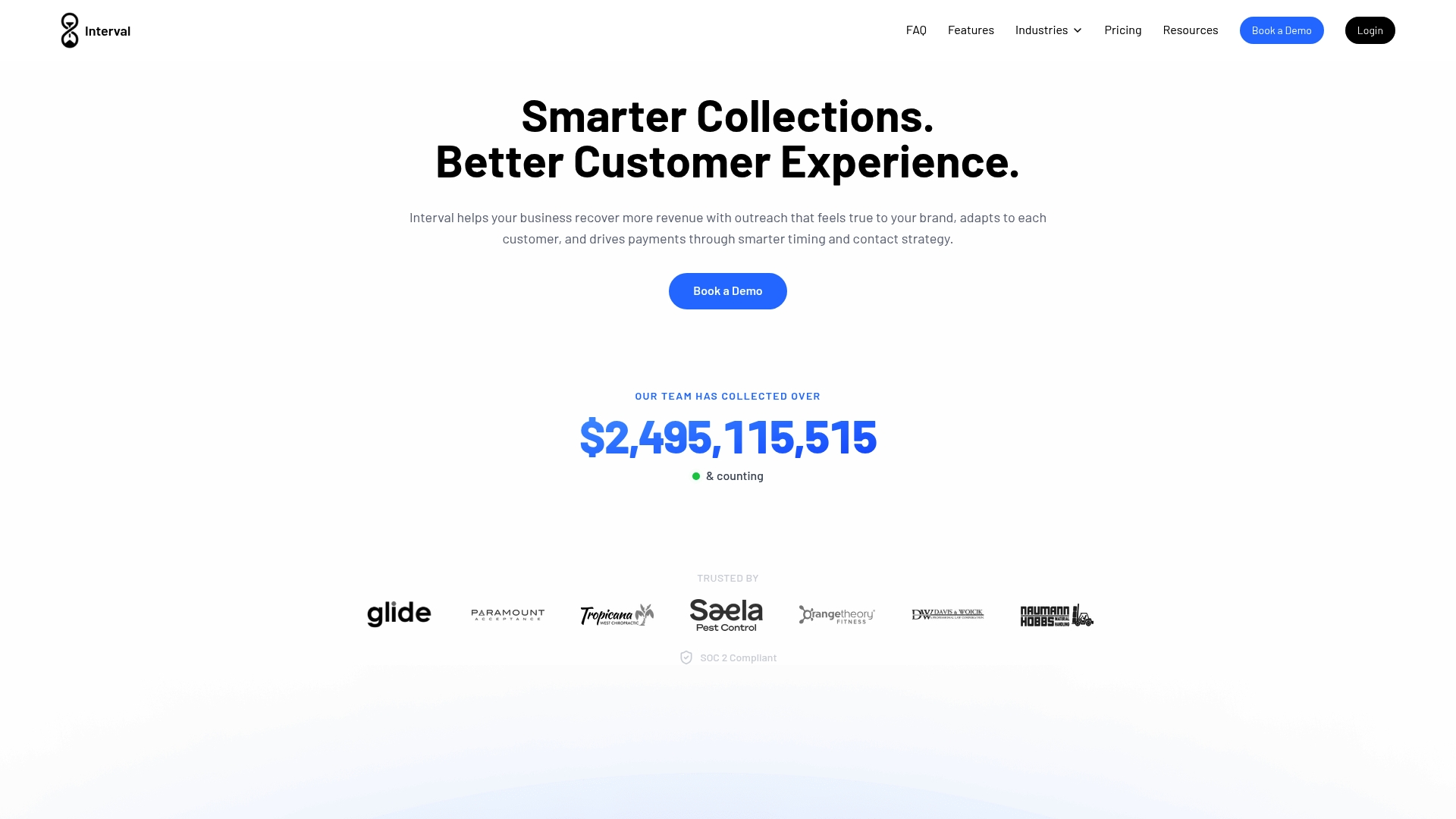
If your team is still manually tracking who owes what and sending follow-up emails by hand, that is a direct drain on cash flow and founder time. Interval-ai handles the entire collections workflow automatically, so you can focus on growing the business instead. Learn more at Interval-ai.
FAQ
What are the best administrative tasks for startups to automate?
Email triage, invoice follow-up, appointment scheduling, CRM data entry, and client onboarding deliver the highest ROI when automated. These tasks are high-frequency, follow predictable patterns, and consume significant founder time.
How much time can automation save a startup founder?
Founders without automation spend 6–8 hours per week on administrative overhead. AI-powered automation reduces that to under 3 hours, reclaiming more than half of that lost time each week.
What tools do startups use to automate admin work?
Common automation tools for startups include Zapier for workflow automation, HubSpot for CRM and onboarding, Calendly for scheduling, QuickBooks or Xero for invoicing, and Intercom or Zendesk for support ticket triage.
Should startups automate everything at once?
No. Start with two or three high-frequency tasks, document the decision rules, and test before scaling. Adding too many automations at once without integration creates more overhead than it removes.
When should a startup hire an operations person instead of automating?
Hire when tasks require consistent human judgment, relationship management, or creative problem-solving that cannot be encoded as a decision rule. Automation handles structured, repeatable decisions. People handle everything else.
