
Automation Tools for Lean Startup Teams: 2026 Guide
Published: June 27, 2026 · 10–11 min read
TL;DR:
- Automation tools enable small startup teams to perform tasks at a scale typically associated with larger organizations. They help save over 20 hours weekly by automating lead capture, onboarding, and payment processes. Selecting the right platform depends on the team's technical skill, workflow volume, and budget, ensuring growth and efficiency.
Automation tools for lean startup teams are software platforms that handle repetitive tasks, connect your apps, and let small teams operate at the speed of much larger organizations. The right lean startup automation software can save founders over 20 hours per week by automating lead capture, customer onboarding, and payment follow-ups. Platforms like Zapier, Make, n8n, and Claude are no longer optional extras. For bootstrapped founders and agile teams in 2026, they are the foundation of a functional growth stack.

1. Zapier: best for non-technical founders
Zapier is the most beginner-friendly automation platform available today, with a drag-and-drop interface and thousands of pre-built templates. You can connect Gmail to Slack, push form submissions into your CRM, or trigger payment reminders without writing a single line of code. Pricing starts in the low $20s per month, making it accessible for early-stage teams. The trade-off is cost at scale: as your workflow volume grows, execution charges add up fast.
2. Make (formerly Integromat): best for complex logic
Make offers visual workflow building with conditional branching, multi-step logic, and better pricing for high-volume automations. It sits one step above Zapier in complexity, which means a slightly steeper learning curve. The payoff is real: you can build workflows that Zapier simply cannot handle without expensive workarounds. Make is the right call when your team has outgrown basic no-code tools but is not ready to self-host.
3. n8n: best for technical founders who want cost control
n8n is an open-source, self-hosted automation platform that gives technical founders full control over their workflows. Self-hosted n8n can handle unlimited workflows with hosting costs near $10 per month, compared to Zapier's execution-based billing. That cost gap becomes significant once you are running hundreds of automations daily. If your team includes a developer, or if you are comfortable with a VPS, n8n delivers the best cost-to-power ratio available.
4. Claude Opus and AI-native agents: best for reasoning-heavy tasks
Layering AI-native tools like Claude Opus on top of standard workflow platforms delivers advanced reasoning and adaptive task management that rule-based tools cannot match. Claude can draft responses, classify data, summarize documents, and make conditional decisions within a workflow. This hybrid approach is becoming standard for 2026 startups that need more than trigger-action logic. Think of it as adding a thinking layer on top of your existing automation pipes.
5. Bardeen: best for browser-based scraping and research
Bardeen runs directly in your browser and automates tasks that live inside web apps, not just between APIs. It excels at scraping prospect data, automating repetitive browser actions, and pulling information from sites that do not offer native integrations. For sales and research-heavy teams, Bardeen removes hours of manual copy-paste work each week. It pairs well with Zapier or Make to push scraped data into your core workflows.
6. HubSpot workflows: best for marketing and sales automation
HubSpot's built-in workflow engine connects your CRM, email marketing, lead scoring, and sales pipeline into one automated system. You can trigger nurture sequences based on contact behavior, auto-assign leads to reps, or update deal stages without manual input. HubSpot analysts advise balancing power and usability to avoid over-engineering workflows prematurely. For teams already using HubSpot as their CRM, the workflow tool is the fastest path to marketing automation with zero additional cost.
7. QuickBooks and Xero: best for automated financial workflows
QuickBooks and Xero both offer automated invoicing, payment reminders, and reconciliation that remove the manual work from your finance stack. Connecting either platform to Zapier or Make lets you trigger payment follow-ups the moment an invoice goes overdue. Consistent, automated follow-up shortens your cash collection cycle without adding headcount. Silence on overdue invoices reads as permission to wait, and these tools make sure you never go silent.
8. Tycoon: best for AI-powered growth marketing
Tycoon positions itself as an AI head of growth, automating SEO, content, and paid acquisition for SaaS founders. Automated growth stacks can replace marketing teams costing $80,000 to $150,000 per year, according to Tycoon. SaaS startups using AI-driven growth automation have reported activation rate lifts of 20–40% compared to manual management. For pre-revenue or early-revenue founders who cannot afford a full marketing team, Tycoon compresses that gap significantly.
9. Role-based AI agent frameworks: best for replacing early hires
Role-based AI agent frameworks enable startups to automate diverse business functions under one AI system, delaying hires while keeping operations synchronized. One AI agent can handle customer support triage, another manages lead qualification, and a third monitors financial anomalies. All three run under a shared context layer, so decisions stay consistent. This approach lets a two-person founding team operate with the functional coverage of a five-person team.
Pro Tip: Before deploying role-based agents, map every task you want to delegate. Agents perform best when their scope is narrow and their inputs are clean.
10. Interval-ai: best for AI-enhanced collections automation
Interval-ai layers AI agents directly on top of standard workflow automation to handle one of the most time-consuming tasks in any startup: collecting overdue payments. The platform uses historical payment data to tailor outreach across email, SMS, and other channels, so every follow-up fits your brand voice. Interval-ai claims to reduce days to payment by over 30 days and allows companies to recover substantial amounts without additional staffing. For SaaS and service businesses where cash flow is the constraint, that is a direct impact on runway.
How automation tools compare: features, cost, and team fit
Choosing the right tool comes down to three variables: your team's technical skill, your workflow volume, and your budget ceiling.
| Tool | Technical skill needed | Pricing model | Best for |
|---|---|---|---|
| Zapier | Low | Execution-based | Non-technical founders, quick wins |
| Make | Medium | Execution-based | Complex logic, mid-stage teams |
| n8n | High | Fixed hosting cost | Technical teams, high-volume workflows |
| Claude Opus | Medium | Token-based | Reasoning tasks, AI-enhanced workflows |
| Bardeen | Low | Freemium | Browser scraping, research automation |
| HubSpot workflows | Low | Bundled with CRM | Marketing and sales teams |
| Tycoon | Low | Subscription | AI growth marketing, SaaS founders |
| Interval-ai | Low | Not publicly listed | Collections, cash flow automation |
The pattern is clear: cost efficiency varies by scale and platform choice. No-code tools win on speed and ease early on, but self-hosted or AI-native platforms win on cost and capability as you grow.
How to choose the right automation tools for your startup stage
Picking the wrong tool at the wrong stage wastes time and money. Follow this sequence to build a stack that grows with you.
-
Start with Zapier. If your team is non-technical and you need wins fast, Zapier's templates get you running in hours, not days. Connect your most painful manual tasks first: lead capture, onboarding emails, and payment reminders.
-
Move to Make when logic gets complex. Once you need conditional branching or multi-step workflows, Make handles that without requiring engineering resources. It is the natural next step for teams that have maxed out Zapier's capabilities.
-
Switch to n8n when volume drives up costs. Execution creep leads to escalating costs on no-code platforms, prompting scale-stage startups to shift to open-source alternatives. If your Zapier bill is climbing, n8n is the move.
-
Add AI-native tools as your stack matures. Once your core workflows are stable, layer in Claude or role-based agent frameworks for tasks that require reasoning, not just rules.
-
Audit and prune regularly. Dead workflows and redundant automations accumulate fast. A monthly audit keeps your stack lean and your costs predictable.
Pro Tip: Prioritize automations by time saved per week, not by how interesting they are to build. The boring ones usually deliver the most value.
Common pitfalls and trends to watch in 2026
The biggest failure mode in lean startup automation is not picking the wrong tool. It is building a fragmented stack that creates more manual work than it removes.
Context fragmentation occurs when disconnected automation tools force founders to manually transfer data between systems, which cancels out the efficiency gains. You end up with five tools that each do one thing well but do not talk to each other. The result is a founder spending hours each week as a human middleware layer.
The fix is architectural unity. Keeping business logic, data, and AI agents in shared context prevents quality degradation when you connect multiple tools. Build your stack around one central data store, and route everything through it.
"Success in automation hinges less on better tools and more on architectural unity and process integration to avoid fragmented, siloed systems."
Watch for these emerging patterns in 2026:
- AI agent orchestration: Single AI systems managing multiple business roles simultaneously, reducing the need for early hires.
- Execution creep awareness: Founders auditing no-code costs monthly and migrating high-volume workflows to self-hosted alternatives.
- Hybrid stacks: Combining Zapier or Make for simple triggers with Claude or custom agents for reasoning-heavy tasks.
Key takeaways
The most effective automation stack for lean startup teams combines a no-code entry point like Zapier, a mid-tier logic layer like Make, and an AI-native reasoning tool like Claude, all built on a unified data architecture.
| Point | Details |
|---|---|
| Start no-code, then scale | Use Zapier first, then migrate complex or high-volume workflows to Make or n8n. |
| Cost scales with volume | Execution-based pricing on Zapier and Make becomes expensive fast; self-hosted n8n solves this. |
| Avoid context fragmentation | Build around one central data store to prevent manual data transfers between tools. |
| Add AI for reasoning tasks | Layer Claude or role-based agents on top of workflow tools for decisions that need more than rules. |
| Automate cash flow early | Tools like Interval-ai handle collections automatically, protecting runway without adding headcount. |
My honest take on automation for lean teams
I have watched founders spend weeks building elaborate automation systems before they have validated their product. That is the wrong order. Automation should follow process clarity, not precede it.
The teams that get the most out of efficient workflow tools for startups are the ones who automate one painful, repetitive task at a time. They do not try to rebuild their entire operation in a weekend. They pick the task that costs them the most hours per week, automate it with the simplest tool that works, and move on.
The architectural unity point is one most founders underestimate. I have seen teams with 12 different tools generating 12 different data formats, and the founder is the one manually reconciling them every Monday morning. That is not automation. That is just expensive complexity.
My recommendation: start with Zapier, get three workflows running well, then ask whether you need anything else. Most early-stage teams do not need n8n or AI agents yet. They need consistent, reliable automations on their highest-friction tasks. Build that foundation first, then layer in sophistication as your volume and complexity actually demand it.
— Tyler
Take your automation further with Interval-ai
Your core workflows deserve a tool built for the specific problem they solve. For startups dealing with overdue payments and cash flow pressure, generic automation is not enough.
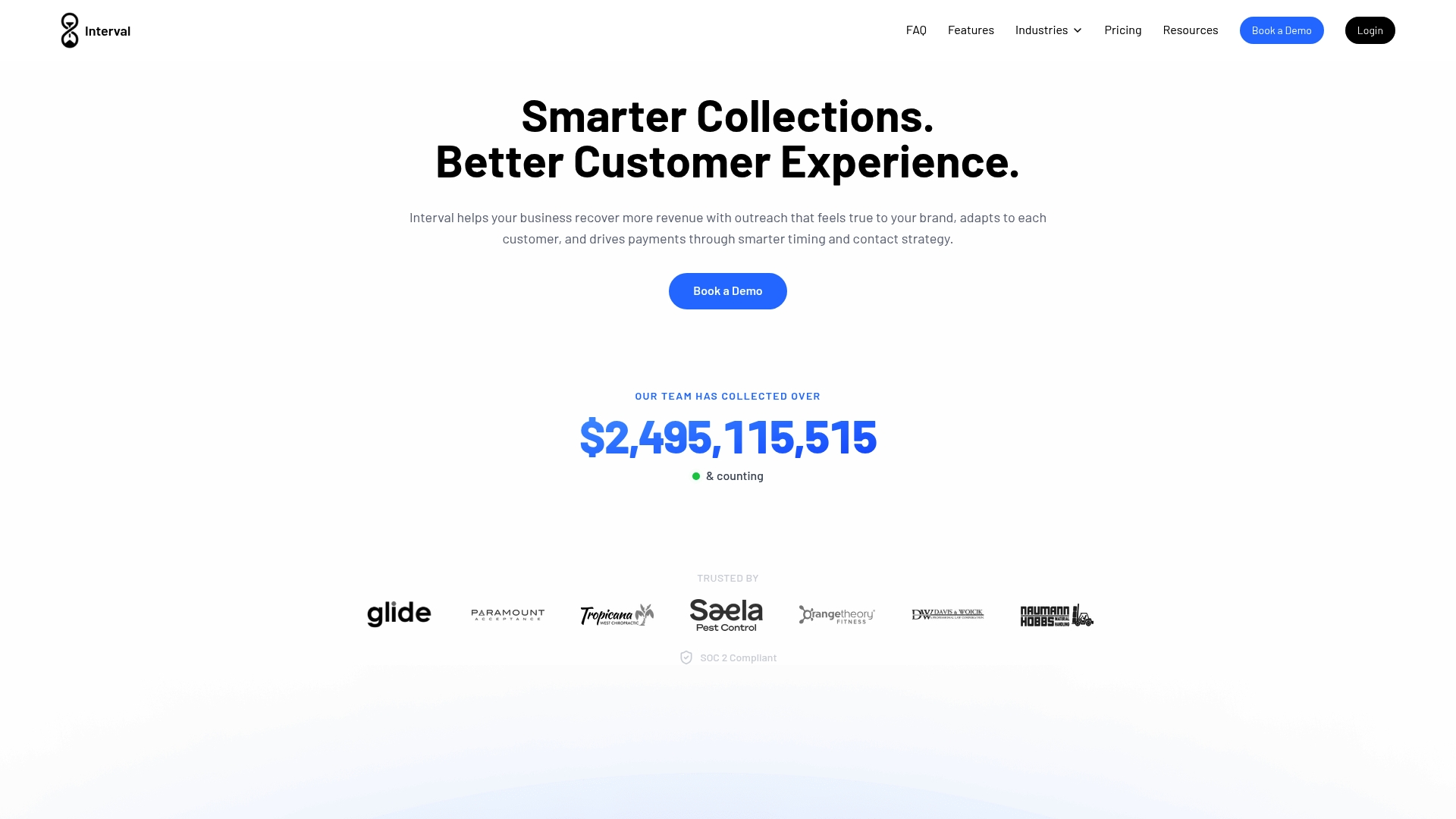
Interval-ai combines AI agents with workflow automation to handle collections the way your brand would. It tailors outreach based on historical payment data, manages multi-channel follow-ups automatically, and reduces days to payment by over 30 days. Clients report saving thousands in payroll costs because the system handles what a collections hire would otherwise do. If cash flow is a constraint on your growth, explore Interval-ai and see what automated collections can do for your runway.
FAQ
What are the best automation tools for lean startup teams?
Zapier, Make, and n8n are the top workflow automation platforms for lean teams, covering non-technical, mid-complexity, and high-volume use cases respectively. Adding AI-native tools like Claude extends their capabilities to reasoning-heavy tasks.
How much can automation save a startup founder each week?
Workflow automation can save founders over 20 hours per week by handling repetitive tasks like lead capture, onboarding, and payment reminders.
When should a startup switch from Zapier to n8n?
Switch to n8n when execution-based billing on Zapier starts climbing with workflow volume. Self-hosted n8n handles unlimited workflows for roughly $10 per month in hosting costs.
What is context fragmentation in automation?
Context fragmentation happens when disconnected tools force manual data transfers between systems, canceling out efficiency gains. The fix is building your stack around one shared data store.
Can AI agents replace early startup hires?
Role-based AI agent frameworks let early-stage startups delegate specialized tasks to AI, delaying hires while keeping business functions synchronized under one system.
