
Payment Conflict Management Solutions Compared for SMBs

Published: August 8, 2026 · 7–8 min read
TL;DR:
- AI-driven collections platforms like Interval-ai help small and medium-sized businesses reduce days-to-payment without increasing headcount. They automate outreach, dispute evidence packaging, and real-time tracking to better preserve customer relationships and lower manual labor. Most SMBs see significant improvement within one to two months after integration.
For most small and medium-sized businesses, an AI-driven collections and dispute-automation platform is the best first choice for managing customer payment conflicts. It reduces days-to-payment, cuts manual follow-up hours, and keeps customer relationships intact — outcomes that matter far more than feature counts. Interval-ai delivers exactly this: automated outreach, dispute evidence packaging, and real-time AR tracking, all without adding headcount. If you're a finance manager evaluating your options, start here.
What types of customer payment conflict management solutions exist?
Not every payment conflict calls for the same response. The right tool depends on your AR volume, average transaction size, and how much you value the ongoing customer relationship.
- Payment-processor tools: Stripe, PayPal, and similar processors offer built-in dispute dashboards and dispute resolution flows that let you respond to chargebacks and communicate with customers before escalation. Best for businesses with low dispute volume who already live inside one processor's ecosystem.
Pro Tip: Before escalating any dispute to a processor or agency, attempt direct resolution with the customer first. Resolving the issue collaboratively is almost always faster and cheaper than a formal chargeback — and it keeps the door open for future business.
How should finance teams evaluate and choose a solution?
The single most important criterion is this: can the solution reduce days-to-payment without damaging customer relationships? Everything else is secondary.
Here's a practical evaluation checklist:
- Dispute handling and evidence management. Does it package evidence automatically, track submission deadlines, and support Visa CE 3.0 elements for friendly-fraud cases?
- Integrations. Confirm compatibility with your accounting software (QuickBooks, Xero), CRM, and payment processors. Passing rich transaction metadata through integrations directly improves both prevention and evidence quality.
Pro Tip: Set a monetary threshold for automatic refunds — many finance teams use $50 as a starting point. For disputes below that value, the operational cost of contesting often exceeds the transaction amount. Auto-refund low-value disputes and focus your dispute effort where it counts.
What does implementation actually look like, and what will it cost?
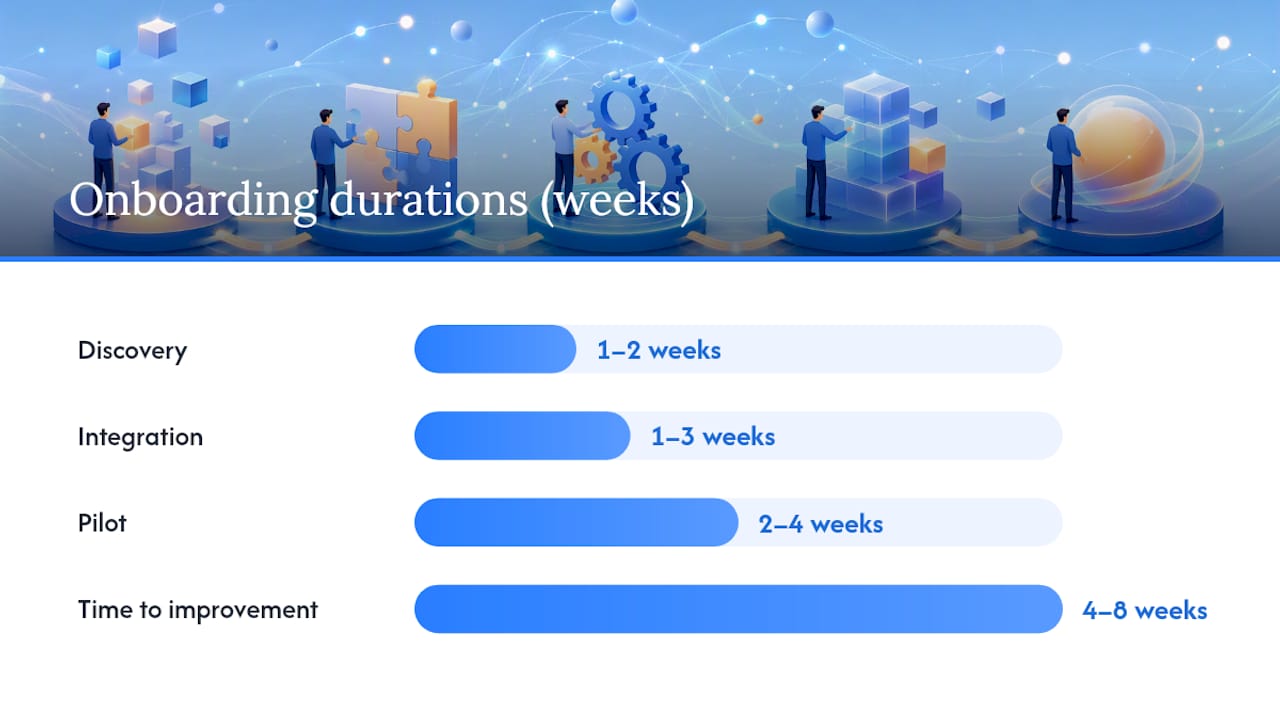
Most SMBs see meaningful payment improvement within 4–8 weeks of completing integration. The timeline depends on how many systems you're connecting and how clean your existing AR data is.
Typical onboarding steps:
- Discovery (1–2 weeks): Map your current AR workflow, identify integration points, and set baseline KPIs (DSO, dispute rate, staff hours per week on collections).
- Integration (1–3 weeks): Connect accounting software, CRM, and payment processor. Platforms that offer pre-built connectors cut this phase significantly.
- Pilot (2–4 weeks): Run the platform on a defined segment of overdue accounts. Measure DSO change and dispute response time against your baseline.
- Scale: Expand to full AR volume once pilot metrics confirm improvement.
Primary cost factors to budget:
- Subscription fee tied to AR volume and number of overdue accounts handled
- One-time integration services (often minimal with pre-built connectors)
- Optional managed services for dispute escalation or agency handoff
ROI metrics worth tracking weekly:
- Days sales outstanding (DSO)
- Dispute-to-transaction ratio
- Time-to-resolution per dispute
- Staff hours saved on collections follow-up
- Recovered revenue per month
Chargebacks impose direct fees and administrative costs, and dispute volume is rising. Getting your measurement baseline in place before launch makes the ROI case straightforward.
A practical checklist to prevent disputes before they start
Prevention reduces both direct fees and the operational drag of fighting disputes. Visa's Dispute Management Guidelines make clear that merchants who exceed network dispute-rate thresholds face monitoring programs and fines ranging from $50 to $150 per dispute.
Implement these before your next billing cycle:
- Use a clear, recognizable billing descriptor that matches your business name as customers know it
- Display your refund and return policy prominently at checkout, not buried in a footer
- Send a post-charge confirmation email with transaction details and support contact
- Enable 3-D Secure authentication for card-not-present transactions
- Set up fraud screening rules in your payment processor
- Send renewal reminders at least 7 days before subscription charges
- Enroll in prevention alert programs such as Visa RDR, which allow you to auto-resolve disputes before they become formal chargebacks
Monitor these KPIs monthly:
- Dispute-to-transaction ratio by product line
- Disputes by sales channel (online vs. in-person vs. subscription)
- Time from dispute notification to response submission
What results do businesses actually see?
A service business running recurring billing came to Interval-ai with a high DSO and a finance team spending many hours per week on manual collections follow-up.
Before Interval-ai: High DSO and significant time spent on collections, inconsistent follow-up across customer accounts. After: Substantial DSO reduction, collections follow-up automated across all channels, and notable savings in payroll costs — without adding personnel.
Interval-ai's clients report that the biggest shift isn't just the numbers. It's that customers respond differently to consistent, professional automated outreach than to ad hoc calls from a staff member who has 20 other tasks that day.
Pro Tip: During your pilot, track staff hours saved alongside DSO. Finance teams that present both metrics to leadership get budget approval for full rollout faster than those who report DSO alone.
Key Takeaways
AI-driven collections automation is the most cost-effective first step for SMBs managing payment conflicts, because it reduces days-to-payment, cuts manual hours, and preserves customer relationships simultaneously.
| Point | Details |
|---|---|
| Start with direct resolution | Attempt customer-first resolution before escalating to processors or agencies. |
| Set a refund threshold | Auto-refund disputes under your chosen threshold; contest only where the value justifies it. |
| Evidence organization wins disputes | Chronological, indexed packets outperform bulk submissions every time. |
| Prevention beats remediation | Clear descriptors, post-charge emails, and Visa RDR enrollment reduce dispute volume before it starts. |
| Interval-ai for SMB collections | Interval-ai claims significant DSO reduction and payroll savings without added headcount, making it the practical pilot choice. |
What most finance teams get wrong about payment conflict management
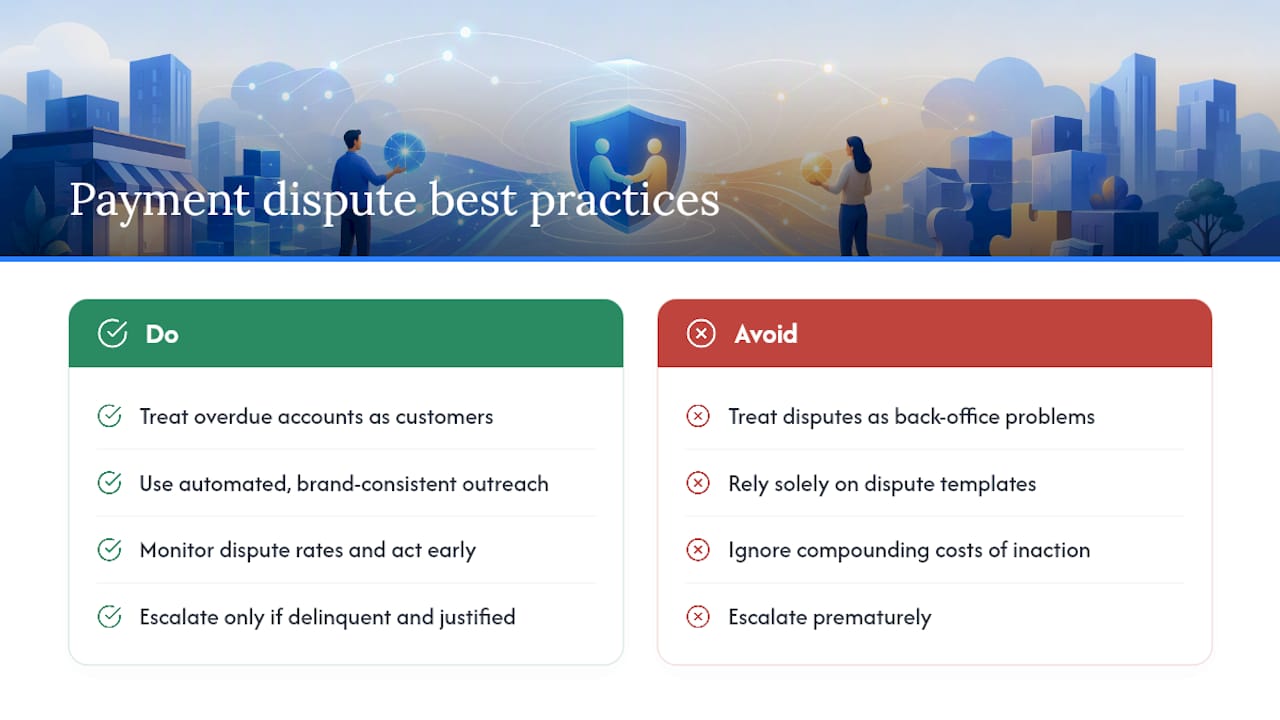
The conventional wisdom says dispute management is a back-office problem. Fix the evidence, submit on time, and move on. That framing misses the bigger opportunity.
The businesses that get the most out of collections automation aren't the ones with the best dispute templates. They're the ones that treat every overdue account as a customer relationship worth preserving, and they build their workflows around that premise. Automated, brand-consistent outreach does something a collection agency never can: it gives the customer a dignified path to pay, without embarrassment or confrontation.
The other thing teams underestimate is the compounding cost of doing nothing. A dispute rate that creeps above Visa's monitoring threshold doesn't just cost you fines. It costs you processor relationships, higher reserve requirements, and eventually the ability to accept cards at all.
When managed escalation — a collection agency or legal action — is the right step, you'll know it: the account is genuinely delinquent, direct outreach has failed repeatedly, and the balance justifies the recovery cost. That's a narrow category. For everything else, automation and direct resolution are faster, cheaper, and better for your business long-term.
Interval-ai cuts days-to-payment without adding staff
Interval-ai gives finance teams a faster path to recovered revenue: automated, personalized outreach built on your payment history data, dispute evidence packaged without manual effort, and integrations with the accounting tools, CRMs, and payment processors you already use.
Clients report over 30 days shaved off their DSO and thousands saved in payroll, all without hiring a collections specialist. The integration is fast, the outreach stays on-brand, and the results show up in your AR reports within weeks.
Book a demo and see how Interval-ai fits your current workflow. If you want to understand how the platform handles the technical side of dispute management and integrations, the banking and finance analytics overview at Sentient Concepts is worth a read alongside it.
Useful sources
- Disputes best practices — Stripe Docs
- How to Handle Payment Disputes | Stripe
- Dispute Management Guidelines for Visa Merchants
- Resolving Payment Disputes for Merchants | PayPal US
- What is a Payment Dispute? 7 Ways to Handle Complexities - Rapyd
- Disputes — Responding (Stripe Docs)
- Disputes API — Stripe Docs
FAQ
What is the fastest way to resolve a customer payment dispute?
Direct resolution with the customer before involving the payment processor is almost always the fastest and least costly path. Formal chargebacks add fees and processing time that direct communication avoids.
How does AI help with payment conflict management?
AI personalizes outreach timing and channel based on payment history, packages dispute evidence automatically, and tracks submission deadlines, reducing manual hours and improving recovery rates.
What evidence do I need to win a chargeback dispute?
Proof of delivery, customer communications, itemized receipts, product descriptions, and a screenshot of your terms of service at checkout are the evidence types issuers expect most. Submit them in a chronological, indexed packet.
When should I use a collection agency instead of automated collections?
Reserve agency referral for genuinely delinquent accounts where direct outreach has failed repeatedly and the balance justifies the recovery fee. For most overdue accounts, automated follow-up resolves payment faster and at lower cost.
How quickly can Interval-ai reduce my days-to-payment?
Interval-ai claims a reduction of over 30 days in days-to-payment. Most SMBs see meaningful improvement within 4–8 weeks of completing integration.
