
How Machine Learning Streamlines Operations for SMEs

Published: May 31, 2026 · 10–11 min read
TL;DR:
- Many SMEs mistakenly believe machine learning is only for large companies with extensive resources, but accessible cloud platforms now enable smaller businesses to leverage its benefits. Implementing targeted ML models can reduce manual effort, improve accuracy, and streamline operations like maintenance, order processing, and demand forecasting. Success depends on focusing on a specific pain point, ensuring proper integration and governance, and maintaining ongoing monitoring and human oversight.
Most small and medium business owners assume machine learning, often called ML, is reserved for companies with dedicated data science teams and seven-figure technology budgets. That assumption is costing them time and money. Understanding how machine learning streamlines operations at the SME level is more relevant now than ever, because the tools have changed dramatically. Cloud platforms, pre-built ML models, and ERP integrations have made this technology accessible to businesses with lean teams and tight margins. This guide breaks down what actually works, what to watch out for, and how you can start applying it without a PhD on staff.
Key takeaways
| Point | Details |
|---|---|
| ML is accessible for SMEs | Cloud-based platforms significantly reduce the cost and expertise needed to deploy machine learning in operations. |
| Real savings are measurable | Companies using ML-integrated workflows report dramatic reductions in manual effort and processing errors. |
| Adaptive models outperform static ones | Continuously updated ML models maintain accuracy as conditions change, reducing costly false alarms and downtime. |
| Start with a specific pain point | Focus your first ML application on one high-friction area, such as order processing or maintenance scheduling, before expanding. |
| Integration determines success | ML tools that connect with existing ERP and workflow systems deliver far more value than isolated point solutions. |
How machine learning streamlines operations: the core concepts
Before getting into examples, it helps to understand what separates machine learning from basic automation. Standard automation follows fixed rules: if X happens, do Y. Machine learning, a subset of artificial intelligence, goes further. It learns from data patterns over time and adjusts its outputs as conditions change. In operations, that distinction matters enormously.
Think about your order management process. A rules-based system might flag any order over a certain dollar amount for manual review. An ML model can analyze hundreds of variables simultaneously, such as customer history, payment behavior, product category, and order timing, to determine which orders actually need attention. The result is far fewer unnecessary interruptions to your team.
The operational workflows that benefit most from ML include:
- Predictive maintenance: Analyzing equipment sensor data to flag issues before a breakdown occurs
- Process automation: Routing tasks, approvals, and exceptions based on learned patterns rather than static rules
- Anomaly detection: Spotting unusual activity in orders, invoices, or production data that warrants a closer look
- Demand forecasting: Predicting inventory needs based on historical trends and seasonal patterns
- Accounts payable automation: Reducing manual matching and approval steps through learned behavior
The data feeding these models typically comes from your ERP system, IoT sensors on equipment, transaction records, or customer interaction logs. The model's job is to find patterns in that data and turn them into decisions or recommendations your team can act on.
Pro Tip: You do not need perfectly clean data to get started. Most cloud-based ML platforms include preprocessing tools that handle common data quality issues automatically. Waiting for perfect data is one of the most common reasons SMEs delay adoption.
Real-world examples of ML in SME operations
The gap between theory and practice closes quickly when you look at what companies are actually doing. These examples span different industries and scales, but the underlying principle is consistent: targeted ML integration delivers measurable operational gains.
PepsiCo's order management transformation
PepsiCo integrated process mining with its SAP S/4HANA ERP to address a persistent friction point: sales order rejections. Before the ML-driven approach, 30% of sales orders were rejected, triggering waves of manual exception handling. After implementation, that rate dropped to 4%, and the company saved over 1,000 hours annually by automating the manual workflows that previously consumed staff time. The key was the ML model's ability to trace root causes in real time and prioritize which exceptions needed human attention.
GE Appliances and AI agents at scale
GE Appliances deployed over 800 AI agents across manufacturing, logistics, and supply chain functions. Shift analysis that previously took hours is now completed in minutes. Real-time decision-making replaced delayed reporting cycles. For a business managing complex supply chains and manufacturing lines, that speed translates directly into reduced downtime and faster responses to disruptions.

The AUTO-MAINT platform for smaller businesses
Not every SME has GE's resources, which is why tools like the AUTO-MAINT platform matter. This serverless cloud MLOps framework was designed specifically to lower the barrier for micro, small, and medium enterprises implementing predictive maintenance. It reduces setup time and eliminates the need for in-house machine learning expertise by handling the pipeline infrastructure automatically. The architecture uses cloud-based microservices, meaning you pay for what you use and scale as needed.
Here is a before-and-after comparison of what ML integration typically changes in SME operations:
| Area | Before ML | After ML |
|---|---|---|
| Equipment maintenance | Reactive repairs after breakdown | Scheduled based on predicted failure signals |
| Order exception handling | Manual review of every flagged order | Automated triage with human review only where needed |
| Invoice processing | Manual data entry and matching | Automated matching with exceptions escalated automatically |
| Demand forecasting | Spreadsheet estimates based on last year | Dynamic predictions updated with real-time data |
Pro Tip: When evaluating ML platforms for your business, ask vendors specifically about ERP integration. A tool that cannot connect to your existing systems will create more manual work, not less.
Technical nuances that affect ML performance
Getting ML into your operations is one thing. Getting it to perform reliably is another. There are several factors that determine whether your ML investment delivers consistent results or frustrating inconsistency.
-
Adaptive models beat static ones over time. A model trained on last year's data may perform poorly if your production conditions, supplier mix, or customer base shifts. Adaptive ML models for predictive maintenance lower total maintenance costs by 38 to 60 percent and reduce unscheduled downtime by continuously retraining on new data. Static models degrade in accuracy silently, which is worse than no model at all.
-
Threshold calibration prevents alarm fatigue. One of the most overlooked deployment issues is nuisance alerts. If your system flags everything as a potential problem, your team stops paying attention. Calibrated decision governance improves early fault detection accuracy to 99 percent while reducing nuisance alarms by 17 percent. Setting thresholds that align with your operational budget and risk tolerance is not optional. It is how you get operators to trust and act on the system's outputs.
-
Data variability and sensor noise degrade results. In real manufacturing and logistics environments, sensors malfunction, data pipelines drop records, and edge cases appear constantly. Your ML deployment plan needs to account for data validation steps that catch these issues before they corrupt model outputs.
-
ERP integration complexity is frequently underestimated. Connecting an ML model to your SAP, Oracle, or other ERP system often requires middleware, custom API work, or vendor-specific connectors. Build this into your timeline and budget from day one.
-
Explainability matters for operator buy-in. If your team cannot understand why the system made a recommendation, they will override it or ignore it. Prioritize ML tools that offer plain-language explanations alongside their outputs. This is especially true in operations settings where experienced staff have strong intuitions about what the numbers should look like.
Practical steps to implement ML in your operations
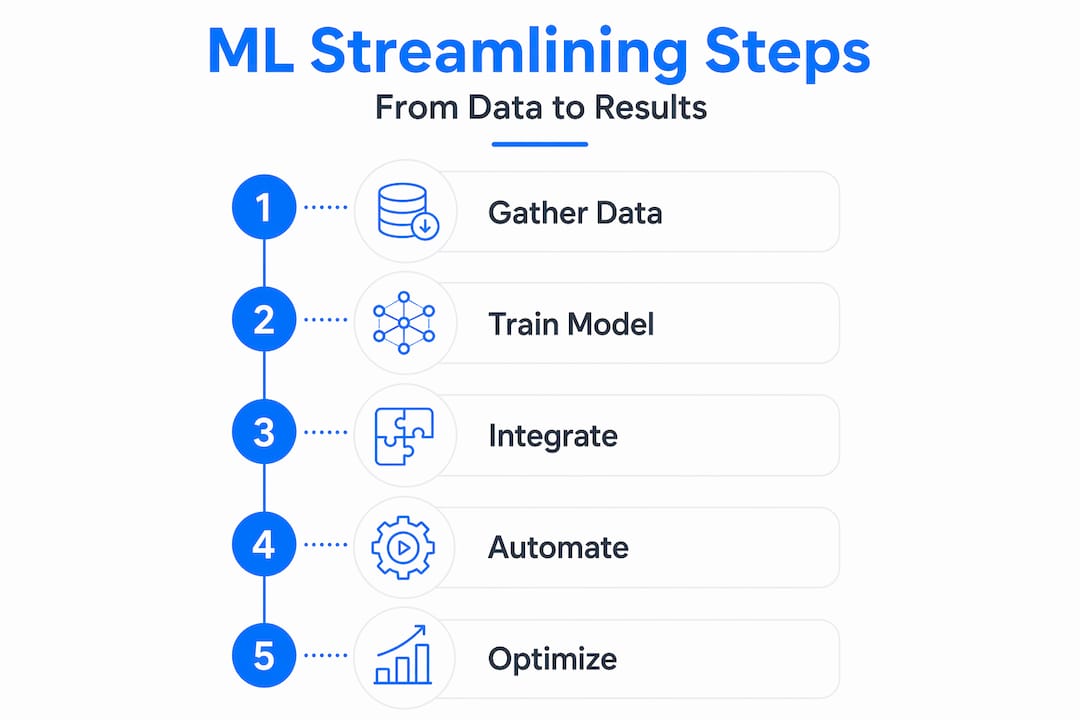
You do not need to overhaul your entire operation to start benefiting from machine learning. The most successful SME implementations start narrow and expand deliberately. Here is how to approach it:
-
Identify one high-friction process first. Look for a workflow that consumes significant staff time, generates frequent errors, or creates downstream delays. Order exceptions, invoice matching, and equipment scheduling are common starting points for SMEs.
-
Audit your data before selecting a platform. ML models need data to learn from. Before committing to a vendor, map out what data you currently capture, where it lives, and how clean it is. Most modern platforms handle messy data, but knowing your starting point sets realistic expectations.
-
Choose cloud platforms designed for SME scale. Platforms built with cloud-based microservices architecture dramatically lower setup costs and remove the need for on-premise infrastructure. They also allow you to start with a narrow use case and expand the scope as you build confidence.
-
Prioritize explainability and auditability. Any ML output that drives a business decision should be traceable. This protects you during audits, helps your team understand and trust the system, and makes it easier to identify when the model needs retraining. As SAP's CEO Christian Klein notes, AI integration succeeds when it executes end-to-end business processes in real time, not as fragmented tools scattered across your workflow.
-
Build in ongoing monitoring from day one. Machine learning is not a set-and-forget technology. Plan for regular reviews of model performance, especially after major operational changes such as new suppliers, product lines, or customer segments. Continuous model adaptation improves accuracy and reduces operational disruption compared to static deployments.
-
Keep humans in the loop for high-stakes decisions. Automation handles the volume. People handle the judgment calls. Structure your workflows so that ML handles routine processing and escalates genuinely ambiguous cases to staff who have context and authority to decide.
Pro Tip: Before signing any vendor contract, run a proof of concept on a real slice of your historical data. Any reputable ML platform should support this. If a vendor refuses or cannot demonstrate results on your own data, that tells you something important.
My honest take on where most ML efforts go wrong
I have seen a lot of ML projects stall, and the failure mode is almost never technical. It is organizational. The businesses that struggle invest in a tool without defining what success looks like operationally. They run a pilot in one department, get promising results, and then the project sits because nobody owns the rollout beyond that initial team.
What actually works is embedding ML into a process that already has an owner. The person responsible for order management, or maintenance scheduling, or collections needs to be the one driving the ML implementation in their area, not the IT department doing it on their behalf. When accountability and tooling live in the same hands, adoption accelerates.
I also think the industry underestimates how much governance matters. Calibrated thresholds and auditable alert policies are not bureaucratic overhead. They are what separate a system your team actually uses from one they route around. The emerging cloud-based MLOps platforms are genuinely exciting because they handle much of this infrastructure automatically, which means SMEs can focus on the business logic rather than the engineering. But no platform substitutes for clear operational goals set before you flip the switch.
— Tyler
How Interval-ai helps your operations work smarter
If you have been managing collections, order follow-ups, or payment workflows manually, you already know how much time those processes consume. Interval-ai applies machine learning directly to the collections process, learning from your historical payment data to automate outreach across multiple channels while keeping your brand voice intact.
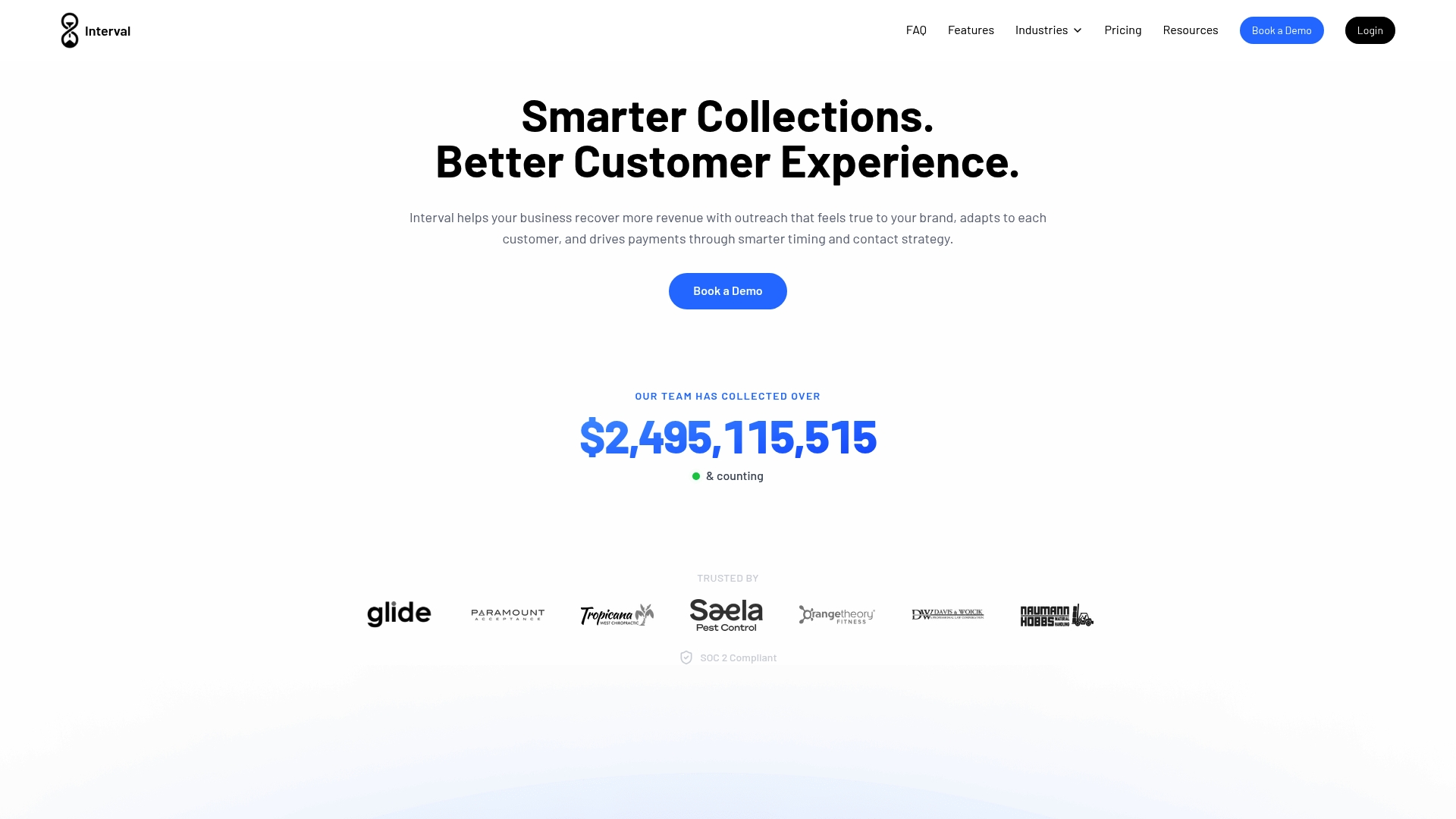
The platform integrates with your existing systems and removes the need for additional staffing to manage communications. Clients report recovering payments faster while cutting payroll costs tied to manual follow-up. Interval-ai reduces days to payment by over 30 days on average. If you are ready to see what automated, data-driven collections looks like for your business, visit Interval-ai to get started.
FAQ
What does machine learning actually do for business operations?
Machine learning analyzes patterns in your operational data and uses those patterns to automate decisions, flag anomalies, and predict outcomes. Unlike rules-based automation, ML models improve over time as they process more data.
How much does it cost to implement ML for an SME?
Costs vary widely, but cloud-based platforms designed for SMEs have dramatically reduced the entry point. Many operate on usage-based pricing, meaning you pay based on the volume of data processed rather than a large upfront license fee.
How do I know if my data is good enough for machine learning?
Most modern ML platforms include data preprocessing tools that handle gaps and inconsistencies automatically. A useful starting check is whether you have at least 12 months of historical records for the process you want to model.
What is the biggest risk when deploying ML in operations?
The most common risk is alert fatigue from poorly calibrated models. When a system generates too many false alarms, operators stop trusting it. Platforms with built-in threshold governance address this directly by aligning alert sensitivity with your operational context.
Can ML improve invoice and payment processing for SMEs?
Yes. ML automates matching, flags exceptions, and learns payment behavior patterns over time. Tools that apply AI to invoice workflows reduce manual data entry and accelerate the order-to-cash cycle significantly.
