
Top 4 Overtime.ai Software Alternatives 2026

Published: July 15, 2026 · 13–14 min read
Managing overdue receivables manually makes finance teams spend too much time on routine follow up. Many automation tools demand heavy customization, lack full-cycle workflows, or require long onboarding before seeing measurable results. This comparison covers pricing, workflow automation, and setup speed so finance teams can match an alternative to their receivable volume and process pace.
Interval
At a Glance
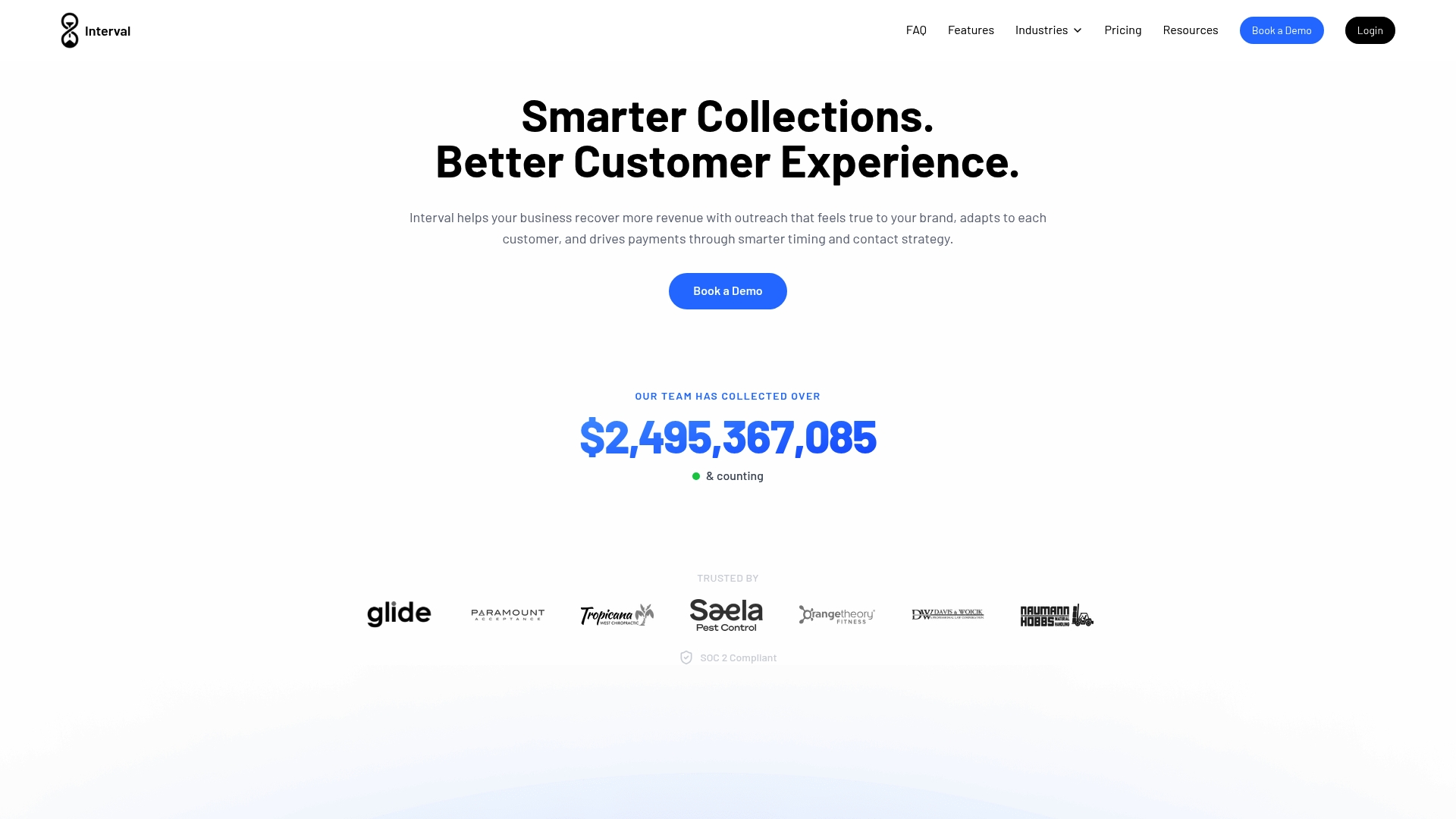
Interval-ai's marketing materials state it can reduce the days to payment by over 30 days. The platform blends AI driven outreach with brand friendly messaging to recover overdue revenue. It advertises quick setup, multilingual support, and SOC 2 compliance for businesses managing receivables at scale.
Core Features
Interval centralizes collections with AI driven collections and outreach and automated follow ups across calls, texts, and email, so teams spend less time on manual chasing. The system offers real time monitoring of conversations and payments and supports payment plans, promises to pay, card and bank info updates, and dispute management. It also supports multilingual communication in over 60 languages and includes compliance and security features including SOC 2 certification.
Key Differentiator
Interval's standout trait is its data driven, fully automated collections workflow that personalizes outreach while keeping brand tone consistent. The platform adapts contact tactics by customer behavior and engagement stage, moving customers through stage based engagement tactics until a payment or plan is recorded. That approach shifts routine follow up work from staff to rules and models tuned to historical payment data.
Pros
The automation materially cuts staff time on day to day collections by handling routine follow up and responses. Multilingual support expands reach beyond English speaking customers, which matters for firms with diverse client bases. Quick setup in about 40 minutes lets teams pilot collections automation without a long integration project. Strong compliance controls and SOC 2 alignment reduce risk when handling payment data. Interval's workflows centralize disputes, payment plan tracking, and account updates to keep accounting teams focused on reconciliation, not outreach.
Cons
- As a collections specialist, Interval may not fit very small businesses with few overdue accounts; AI responses can also require human oversight for sensitive or legally complex cases.
Who It's For
This product fits finance teams and business owners who manage significant volumes of overdue receivables and want to move outreach off overloaded staff. It suits companies that need branded messaging, multilingual outreach, and stronger compliance controls for payment data. If you use people to run daily collections, Interval aims to replace much of that manual workload.
Unique Value Proposition
Interval-ai's automated, brand friendly outreach replaces routine human touchpoints with adaptive models that preserve customer tone while pursuing payment. That operational change reduces the need to add collection headcount and lets accounting staff focus on exceptions and reconciliations. For teams tracking days to payment and payroll spend, that shift creates a measurable workflow difference compared with manual follow up.
Real World Use Case
A medium sized SaaS company moved its manual billing follow up to Interval and cut routine reminder tasks for its finance team. The automated system handled multilingual messages, payment plan offers, and tracked promises to pay while the team handled disputes. That setup freed two full time staff from daily outbound work and let them concentrate on cash application and customer exceptions.
Pricing
Pricing is not publicly listed and appears to follow a tailored model based on volume and needs. Expect pricing discussions to reflect receivable volume, required channels, and compliance features. Contact sales for a custom quote and deployment timeline.
Website: https://interval-ai.com
Agile Receivables
At a Glance
Agile Receivables reports compliance with SOC 2, HIPAA, and PCI-DSS. The platform combines reminders, payments, and collections across channels so teams keep activity in a single system. Pricing is tailored to volume and needs, and the vendor highlights quick onboarding for mid to large organizations.
Core Features
Agile Receivables centralizes omni-channel automated reminders across SMS, email, voice, and mail while offering AI-driven early-out programs and structured collection workflows. The system supports internal and third-party collections with performance visibility and includes an upcoming legal and debt portfolio marketplace. It also delivers real-time reporting and analytics alongside the compliance controls the vendor cites.
Key Differentiator
The product positions itself as an all-in-one receivables automation system that covers the full collections lifecycle from billing through portfolio transactions. Its focus on customizable workflows and integrated analytics lets finance teams manage outreach, routing, and recovery without stitching multiple point tools together. That single-system approach favors organizations that want fewer vendors and consolidated reporting.
Pros
Integrated capabilities reduce the need to maintain separate reminder, payment, and collections systems, which simplifies reconciliation and audit trails. The AI-driven outreach and early-out programs aim to increase recoveries while lowering manual follow-up. Custom workflows and the compliance controls the company reports make the platform suitable for regulated sectors, and the vendor cites a fast onboarding process plus tailored pricing to match volume and complexity.
Cons
-
Trustpilot reviews indicate some users encounter difficulties with technical support and onboarding complexity.
-
Buyer feedback suggests limitations handling very high-volume, complex portfolios without dedicated support.
-
Teams unfamiliar with AI-driven automation face a learning curve when configuring outreach strategies and rules.
When It May Not Fit
If your portfolio has many layered ownership structures or bespoke legal routing, Agile Receivables may require heavy customization and expert services. Organizations that expect turnkey handling of large, irregular portfolios should plan for dedicated support resources. Small companies with very low invoice volume may find the platform more capability than they need.
Notable Integrations
-
QuickBooks
-
Xero
-
Salesforce
Who It's For
You should consider Agile Receivables if you run a medium or large finance, healthcare, SaaS, or professional services business and need an integrated receivables system. Finance leaders and collections managers who want consolidated reporting, compliance controls, and fewer vendor touchpoints will get the most value. If your team prefers single-vendor control over the entire lifecycle, this product fits well.
Real World Use Case
A healthcare clinic uses Agile Receivables to automate appointment invoicing and send AI-optimized payment reminders by SMS and email. The clinic manages early-out recovery programs, hands off accounts to third-party collectors within the same system, and watches collection trends in real time to reduce days sales outstanding.
Pricing
Pricing is not listed publicly. The vendor states plans are customized by volume and feature needs and provides quotes on request. Expect pricing conversations to factor onboarding and any dedicated support required for complex portfolios.
Website: https://agilereceivables.com
Yonovo
At a Glance
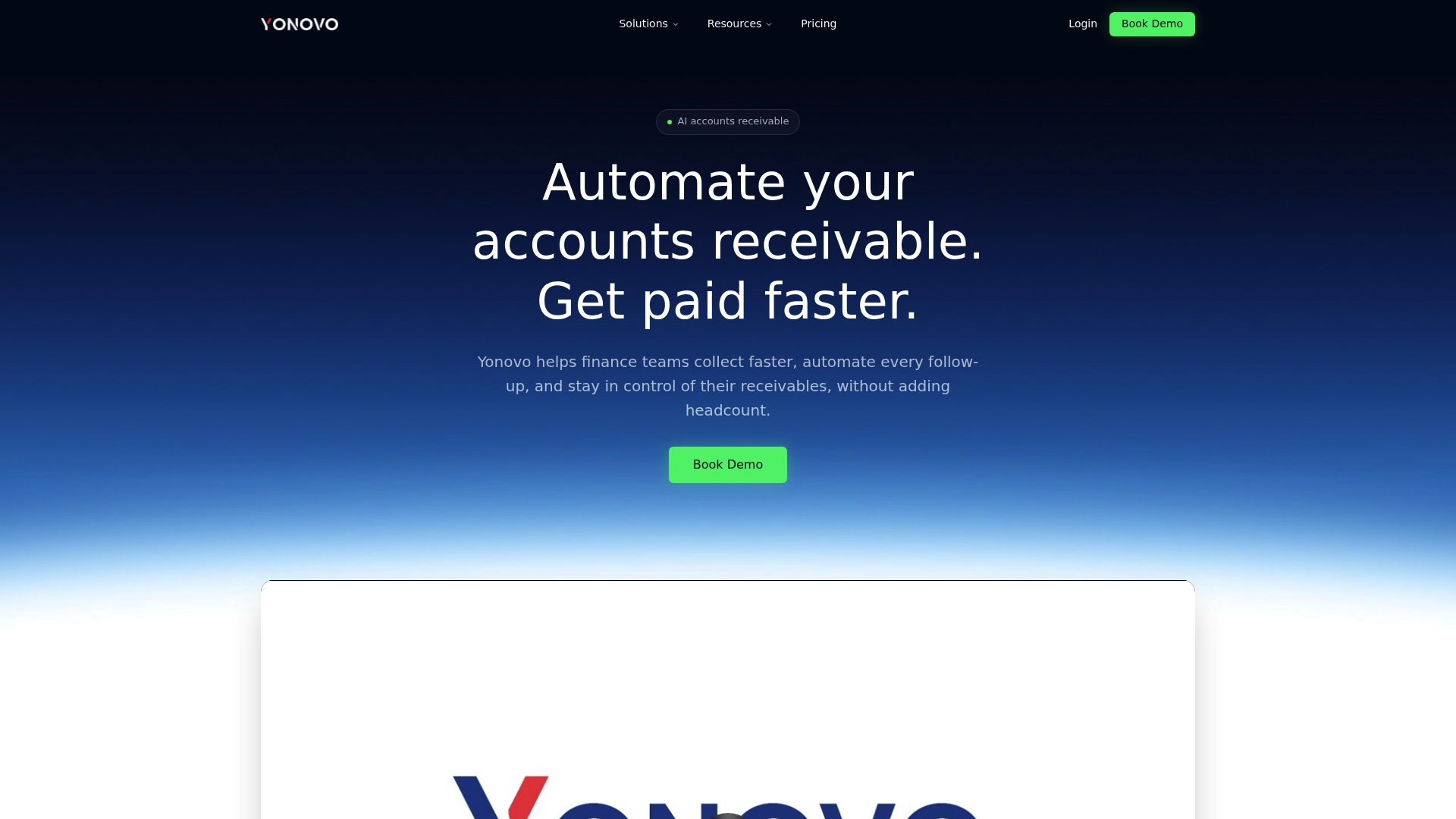
Yonovo reports it reduces manual follow-up tasks by up to 75%. The vendor claims it reduces days sales outstanding by an average of 15 days. The company also advertises that most customers can go live within one day.
Core Features
Yonovo automates multichannel follow-up across email, SMS, and voice and applies AI powered collection strategies that learn which messages work best. It connects to common accounting and ERP systems for invoice syncing, routes disputes to human teams, and shows dashboards with customer profiles and risk scoring.
Key Differentiator
Yonovo's main advantage is quick setup paired with adaptive AI strategies that refine outreach based on payment behavior over time. That combination helps shorten implementation time and lets the system improve collection sequences as it sees results.
Pros
Yonovo automates routine chasing, freeing finance staff for higher value work. That claim about reduced manual work and faster payments points to fewer routine tasks and improved cash flow for clients. Branded messages help preserve customer relationships, and built in dispute routing hands exceptions to people when needed. Real time dashboards and customer profiles give your team clear visibility into who to prioritize and why.
Cons
- Dependent on integration setup. Initial connections to accounting or ERP systems may require developer support or vendor assistance.
- Effectiveness varies with contact quality and data accuracy. Bad email addresses or missing invoice fields reduce automation value.
- Requires trust in automated outreach. Some teams will still need manual oversight for sensitive accounts or complex disputes.
When It May Not Fit
If your invoice records or customer contact data are incomplete or error prone, Yonovo may struggle to reach the vendor advertised gains. Small operators without internal IT support could find initial integration burdensome. Organizations that refuse automated outreach for high value accounts should not rely on Yonovo as the sole collections method.
Notable Integrations
QuickBooks, Xero, Odoo, NetSuite, Sage Intacct
Who It's For
Finance teams in mid sized to large businesses that want to automate receivables collection without adding headcount. It suits companies that already use mainstream accounting or ERP software and can supply clean invoice and contact data.
Real World Use Case
A manufacturing firm connected Yonovo to QuickBooks, automated follow ups across email, SMS, and voice, and reported a reduction in average DSO consistent with that claim while freeing the finance team from manual chasing.
Pricing
Pricing is custom and based on company size and needs. The vendor provides specific quotes after a demo and scoping conversation.
Website: https://yonovo.com
Billtrust
At a Glance
Billtrust's marketing materials state it connects through 40+ connectors to ERP systems, banks, payment portals, and eCommerce platforms. The vendor positions the platform as AI powered for invoicing, cash application, collections, credit decisions, and embedded eCommerce. Buyers often cite customization and integration depth as the most tangible advantage.
Core Features
Billtrust automates invoicing and follow-up while using AI to match payments to open receivables. Collections use behavior analytics to prioritize outreach and to adjust messaging based on payer patterns. The product also supports credit decision automation and offers embedded eCommerce hooks for real time inventory and order updates.
Key Differentiator
The platform's standout feature is its focus on end to end accounts receivable workflows that combine embedded AI analytics with configurable AR rules. That setup lets teams set policies, route exceptions, and apply predictive scoring to unpaid invoices. The result is a system that personalizes follow up and applies cash automatically where rules and AI agree.
Pros
Billtrust bundles invoicing, collections, cash application, and credit decision logic into a single AR product, which reduces the number of vendor connections finance teams manage. The vendor reports high customer satisfaction and industry recognition, which customers cite as confidence for large rollouts. The platform supports extensive integrations, which helps companies tie AR to ERP, payment, and bank systems without building every connector in house.
Cons
- Implementation complexity can be significant for companies with legacy ERP setups and bespoke billing rules.
- Realizing full benefits requires careful configuration and testing before go live.
- Adoption speed varies across teams, and some buyer reviews call out the need for dedicated internal resources.
When It May Not Fit
Organizations with very small finance teams or low invoice volume will likely find Billtrust more than they need. Companies that lack an integration plan or an internal technical lead may face longer deployments. Firms wanting a plug and play solution with minimal customization will encounter extra work during setup and change management.
Notable Integrations
- ERP systems
- Banks and financial institutions
- Payment portals
- eCommerce platforms
Who It's For
Large and mid sized B2B finance teams that manage high invoice volumes and multiple customer payment channels. Teams that need configurable AR rules and prefer to consolidate invoicing, collections, and cash application in one product. Finance leaders planning a multi month implementation with internal IT support.
Real World Use Case
Kinepolis, an international cinema chain, implemented Billtrust's automated collections to reduce Days Sales Outstanding and overdue invoices. The company used the platform to automate follow up and to apply cash matching rules, which freed billing staff for other operational tasks. That deployment illustrates how Billtrust handles complex customer billing patterns at scale.
Pricing
Pricing is not specified publicly. Billtrust typically offers customized enterprise pricing based on volume, integrations, and implementation scope.
Website: https://billtrust.com
Comparison of alternatives
In evaluating accounts receivable management solutions, businesses often prioritize automation efficacy, system integration, and customization. Each product assessed here offers unique strengths across these dimensions.
Advanced automation capabilities
When it comes to automating the collections process, Interval emerges as a leader with its adaptive collection workflows that tailor customer outreach based on payment behavior. This approach enables a dynamic response mechanism, efficiently moving clients through the collection stages. Yonovo follows, employing AI-driven strategies to refine collection approaches. However, its reliance on accurate data and integrations can become challenging for firms missing these prerequisites.
System integration and configuration
Billtrust excels in system integration with over 40 connectors to ERP systems, payment portals, and eCommerce platforms, accommodating intricate accounts receivable processes. Similarly, Agile Receivables provides a consolidated lifecycle solution that integrates end-to-end receivable tasks within one platform, simplifying operations for expansive organizations. In comparison, Interval features quick setup and offers flexibility in multilingual communication, serving businesses with diverse customer bases effectively and efficiently.
Best fit
- Managing multilingual collections for international customers aligns perfectly with Interval's capabilities, given its support for over 60 languages and compliance-driven design.
- Organizations desiring a centralized, end-to-end receivables approach benefit significantly from Agile Receivables' integrated lifecycle management.
- Companies prioritizing deep ERP, bank, and eCommerce connections achieve great results leveraging Billtrust's extensive integration support.
- Enterprises seeking a combination of quick implementation and adaptive communication strategies with a foot in automation should turn to Yonovo’s offerings.
Our pick
Interval-ai.com provides a transformative approach to accounts receivable automation with its behavior-adaptive workflows and multilingual communication capabilities. While other products present strengths in integration or full lifecycle management, Interval excels for businesses needing efficient and customer-adaptive solutions. That said, organizations valuing deeply integrated multi-system operations may find Agile Receivables or Billtrust better suited to their needs.
The following table compares solutions for automating accounts receivable processes, focusing on functionalities, compliance, and deployment considerations.
| Product | Key Differentiator | Best For | Pricing | Notable Limitation |
|---|---|---|---|---|
| Interval-ai | Data-driven, fully automated collections workflow | Large-scale receivables management | Price not published | Not suited for very small businesses |
| Agile Receivables | All-in-one receivables automation | Medium or large regulated sectors | Price not published | Complexity in handling very large portfolios |
| Yonovo | Quick setup with adaptive AI strategies | Mid-sized to large businesses | Price not published | Dependant on integration to existing systems |
| Billtrust | End-to-end accounts receivable management | Large, multi-channel finance teams | Price not published | Complex configurations for setup |
How Can You Improve Collections Beyond Overtime.ai Alternatives
Managing overdue payments can drain your finance team and slow cash flow. The right solution lets you automate routine follow ups while keeping your brand's voice consistent. Interval-ai uses advanced AI to tailor outreach strategies based on historical payment data. This reduces days to payment by over 30 days and frees staff from manual chasing. Its multilingual support and compliance features make it a solid choice for businesses handling large receivables volumes.
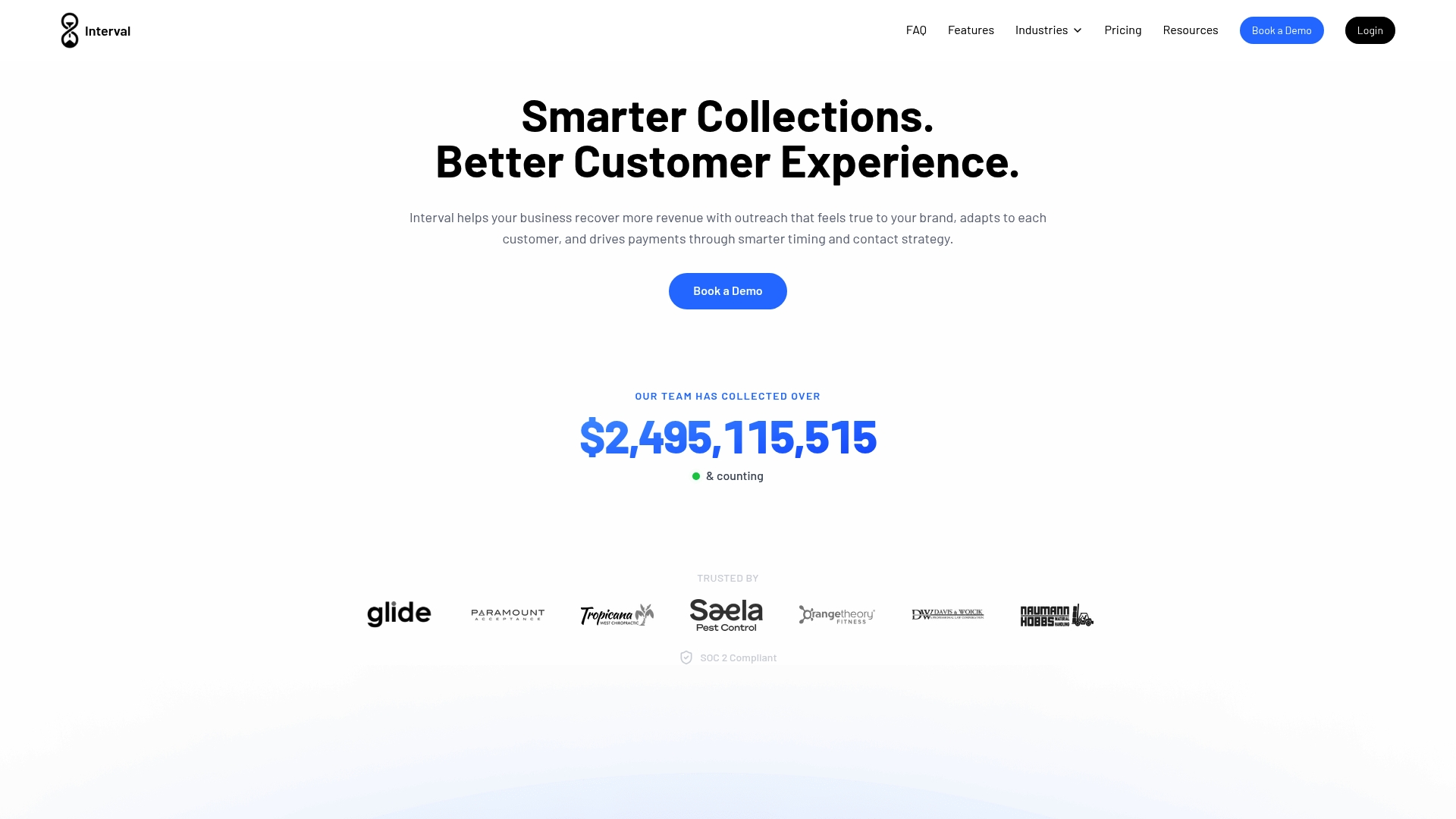
If your finance team wants to cut payroll costs and focus on exceptions instead of reminders, see how Interval-ai manages automated collections that adapt to customer behavior. Visit Interval-ai and book a demo to start measuring faster payments and improved cash flow today.
FAQ
What advantage does Interval-ai have for accounts receivable automation?
Interval-ai automates collections and outreach, allowing teams to spend less time on manual hiring. Its AI-driven collections system centralizes communication across calls, texts, and emails to effectively manage overdue accounts.
How does Interval-ai compare to Yonovo?
Yonovo is known for its quick setup and adaptive AI strategies that refine outreach based on payment behavior over time. In contrast, Interval-ai's strength lies in its brand-friendly messaging and fully automated collections workflow, which is particularly beneficial for businesses prioritizing brand consistency in customer interactions.
What features support Interval-ai's effectiveness in accounts receivable?
Interval-ai supports payment plans, promises to pay, card and bank info updates, and dispute management. This comprehensive suite of features streamlines the collections process for finance teams, significantly reducing the time spent on follow-ups.
Can I use Interval-ai for multilingual outreach?
Yes, Interval-ai supports communication in over 60 languages, making it suitable for firms with diverse client bases. This feature enables companies to engage with a wider audience while maintaining brand messaging.
What compliance controls does Interval-ai offer?
Interval-ai offers strong compliance features, including SOC 2 certification, which reduces risk when handling payment data. This gives finance teams peace of mind when it comes to security in their accounts receivable processes.
