
Automation and Brand Consistency: Your 2026 Guide
Published: August 9, 2026 · 14–15 min read
How automation protects your brand identity across every channel
The role of automation in brand consistency is straightforward: it acts as a built-in safeguard that stops off-brand content before it ever reaches your audience. Rather than relying on manual reviews or hoping your team remembers page 42 of a style guide, automation embeds brand rules directly into the tools your people use every day.
Here is what that looks like in practice:
- Centralized asset governance: Automation platforms serve as a single source of truth, ensuring every team pulls from the same approved library of logos, colors, and copy.
- Proactive guardrails: Brand rules are enforced at the point of creation, not after the fact, so off-brand content gets flagged before it circulates.
- Workflow automation: Approval routing, rights checks, and version control happen automatically, cutting the manual bottlenecks that slow teams down.
- Template-driven creation: Non-designers can produce on-brand content using locked templates, reducing the risk of visual drift across regions and departments.
- Freed creative capacity: When mechanical tasks like resizing, reformatting, and compliance checks run automatically, your creative team can focus on storytelling and brand differentiation.
Fragmented marketing operations create operational waste through redundant workflows and disconnected tools. Purpose-built automation platforms reduce that waste by centralizing governance in one place, giving brand managers real visibility and control at scale.
Why traditional brand guidelines fail to maintain consistency at scale
Static brand guidelines describe what you want. They rarely prevent what you don't. That gap is where brand consistency breaks down, and it happens faster than most teams expect.
The core problem is interpretation. A PDF style guide can tell a designer to use "electric blue," but it cannot stop a regional marketer from picking the closest color they can find in PowerPoint. Guidelines describe intent; they leave execution open. The further content creation spreads across teams, time zones, and channels, the wider that gap becomes.
Manual review queues make things worse. When every piece of content needs a brand manager's sign-off, you create a bottleneck that slows production and frustrates contributors. Teams start routing around the process, and outdated or misused assets end up in market. A Lucidpress study found that brand consistency can increase revenue by 10–20%, yet 77% of organizations admit they struggle with off-brand content.
Static standards also degrade over time. A brand guide written two years ago may not reflect your current visual identity, updated messaging, or new product lines. Without a mechanism to push updates to every contributor automatically, outdated assets keep circulating long after they should have been retired.
Pro Tip: Treat your brand guidelines as a living system, not a document. The moment they live only in a PDF, they start losing their grip on actual output.
- Fragmented toolsets mean contributors work from different versions of the same asset.
- Disconnected teams, especially across regions, develop local interpretations that drift from the core identity.
- Human errors in manual processes cause compliance risks and reputational exposure.
- Without automated enforcement, brand dilution compounds quietly until it becomes visible to customers.
Core functions of automated brand consistency systems
Effective brand automation is not a single tool. It is a set of interconnected capabilities that work together to enforce consistency at every stage of content creation and distribution.
| Function | What it does |
|---|---|
| Centralized DAM | Stores all approved assets with version control and access permissions |
| Automated brand rules | Enforces color, font, logo usage, and messaging tone at the point of creation |
| Rights and compliance management | Checks licensing, expiration dates, and regional restrictions automatically |
| Template-driven creation | Lets non-designers produce on-brand content without specialist software |
| Workflow automation | Routes approvals, flags non-compliant content, and manages distribution |
| Consistency dashboards | Tracks brand adherence metrics across channels and teams in real time |
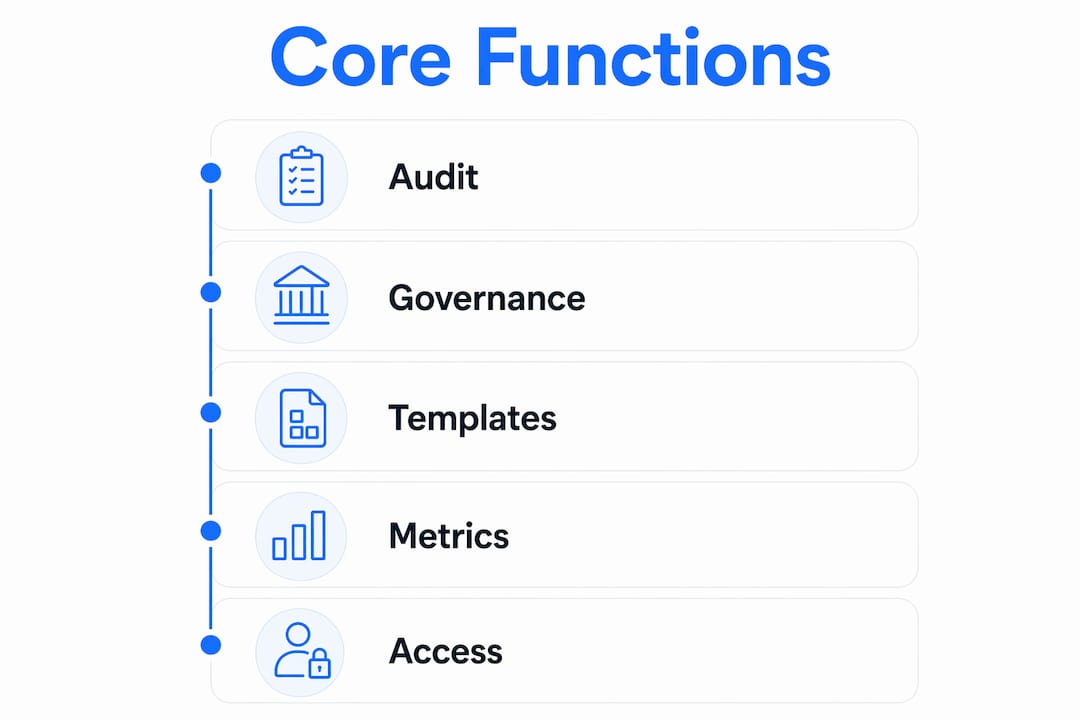
AI-powered DAM platforms enforce brand governance through usage rules, version control, and access permissions, preventing outdated or non-compliant content from reaching the market. They also scan for misused assets across the web, protecting both brand integrity and legal compliance.
Template-driven creation tools are particularly valuable for distributed teams. A sales rep in a regional office can generate a pitch deck that meets every brand standard without ever opening a design application. The brand rules are locked in; the content is flexible. That combination is what makes automation practical for organizations with dozens or hundreds of content contributors.
Metrics and dashboards close the loop. Without visibility into how consistently your brand is being applied, you are managing by assumption. Automated monitoring gives brand managers real data on where consistency is holding and where it is slipping, so adjustments can be made before problems compound.
Common challenges in brand consistency and how automation solves them
Distributed teams are the most common source of brand drift. When marketing, sales, customer success, and regional offices all create content independently, the chances of visual and messaging divergence multiply quickly. Automation addresses this by giving every contributor access to the same approved assets and templates, regardless of location or technical skill.

Outdated assets are a persistent risk. Without automated controls, an expired logo or an old tagline can stay in circulation for months. Embedding governance into workflows blocks outdated or unlicensed assets from being used, protecting the brand from both reputational and legal exposure.
Manual approval bottlenecks slow content velocity without actually guaranteeing quality. When a brand manager has to personally review every asset, the queue grows faster than it can be cleared. Automated approval routing handles routine compliance checks instantly, escalating only the exceptions that genuinely need human judgment.
Gaps in brand knowledge among contributors are harder to solve with training alone. A new hire or an external agency partner may not fully understand your brand standards. Automation compensates by making the right choice the easy choice: templates, locked color palettes, and pre-approved copy blocks guide contributors toward compliance without requiring deep brand expertise.
- Scaling enforcement: Automated rules apply consistently whether you have 10 contributors or 10,000.
- Reducing rework: Catching off-brand content at creation is far cheaper than correcting it after distribution.
- Protecting reputation: Non-compliant content that reaches customers can erode trust quickly; automated guardrails prevent that exposure.
How to implement automation for brand consistency: a practical framework
Getting automation right requires more than selecting a tool. The sequence matters. Moving too fast without a clear foundation produces automated inconsistency rather than automated consistency.
Step 1: Conduct a brand asset and process audit
Before you automate anything, map what you have. Catalog every asset type, identify which teams create content, and document the current approval process. This audit reveals where inconsistency is already happening and which workflows are most in need of automation.
Step 2: Define your brand standards and governance rules
Translate your brand guidelines into specific, enforceable rules. "Use our brand blue" becomes a locked hex code. "Professional tone" becomes a defined vocabulary list and tone score. The more specific your rules, the more effectively automation can enforce them.
Step 3: Select and integrate your tools
Choose an AI-powered DAM platform that fits your content volume and team structure. Tools like Lucidpress, Marq, Adobe's brand intelligence systems, and GoHighLevel each address different aspects of brand governance. Lucidpress and its rebranded successor Marq focus on template-driven creation for distributed teams, making it straightforward for non-designers to produce compliant content. Adobe's brand intelligence systems integrate with broader creative workflows, offering AI-powered compliance checks across asset types. GoHighLevel provides workflow automation that connects brand governance with broader marketing operations, useful for agencies managing multiple client brands simultaneously.

Step 4: Train your teams
Automation reduces the burden on contributors, but it does not eliminate the need for understanding. Train teams on how to use the new tools, what the guardrails are designed to protect, and how to escalate edge cases that require human judgment.
Step 5: Establish monitoring KPIs
Define what brand consistency success looks like in measurable terms. Track metrics like the percentage of assets created from approved templates, the volume of flagged non-compliant content, and time-to-market for new campaigns. These numbers tell you whether the system is working.
Step 6: Build in feedback loops
Automation should improve over time. Schedule regular reviews of flagged content to identify patterns, update templates when brand standards evolve, and create a clear process for contributors to flag cases where the automated rules produce the wrong result.
Pro Tip: Start with the highest-volume, lowest-complexity content first. Social media posts and sales decks are ideal candidates for template automation. Reserve human review for brand-defining work like campaign concepts and messaging strategy.
Real-world examples of brands achieving consistency with automation
The clearest proof of automation's value in brand management comes from how organizations have used it to solve specific, concrete problems.
A global consumer goods company with regional marketing teams across multiple continents faced a familiar problem: every region was adapting campaign assets independently, producing visual drift that weakened the global brand. By centralizing assets in an AI-powered DAM and deploying locked templates for regional adaptation, the company gave local teams the flexibility to localize content while keeping colors, typography, and logo usage consistent. Time-to-market for regional campaigns dropped, and the volume of assets requiring central review fell sharply.
Automated branding enables non-design teams to create on-brand content through templates and standardized visual elements, reducing manual design effort and accelerating time to market. That efficiency gain compounds across an organization: fewer revision cycles, less rework, and more creative capacity directed toward high-value work.
Fintech firms have applied the same logic to brand governance across customer-facing communications. When AI automates marketing workflows, brand managers can enforce consistent tone and visual identity across email, social, and in-app messaging without manually reviewing every piece of content.
The brands that see the strongest results from automation are those that treat it as a governance layer, not a content factory. They use automation to protect what is already defined and to free their people to work on what cannot be automated: the creative judgment, cultural insight, and emotional intelligence that make a brand memorable.
Balancing automation with human oversight in brand management
Automation handles the mechanics of brand consistency exceptionally well. It enforces rules, flags violations, and scales output without fatigue. What it cannot do is decide what your brand should stand for, or whether a campaign will resonate with a specific cultural moment.
Enterprise AI marketing platforms significantly lower cost-per-acquisition and increase creative output through automation. That efficiency is real and measurable. But marketers trust AI for media buying and productivity while remaining cautious about handing it control over brand identity creation. The reason is not technophobia. It is a clear-eyed recognition that emotional intelligence and cultural relevance cannot be automated into existence.
Sunny Bonnell, co-founder and CEO of branding agency Motto, put it plainly in a Digiday interview: "AI is incredibly useful for accelerating the mechanics of marketing, but the closer it gets to defining the meaning of the brand itself, the more cautious leaders become."
The practical implication is a clear division of labor. Automation owns the mechanical layer: formatting, resizing, compliance checks, approval routing, and asset distribution. Humans own the strategic layer: brand positioning, campaign concepts, tone decisions, and the judgment calls that require cultural context. Separating mechanical from strategic tasks is not just best practice; it is what keeps a brand from becoming generic.
- Automation enforces what is already decided; humans decide what is worth enforcing.
- AI can scale a brand voice; it cannot create one.
- Brands that pair data insights with human creative strategy outperform those that rely solely on automated output.
- Human oversight at key touchpoints, especially in customer-facing communications, preserves the emotional connection that drives loyalty.
The real risks of over-automation in branding
Over-automation is a genuine risk, and it tends to arrive quietly. The warning signs are subtle at first: content that is technically compliant but feels flat, campaigns that look polished but fail to connect, a brand voice that sounds consistent but says nothing distinctive.
The core problem is that automated systems optimize for averages. When every piece of content is generated or filtered through the same rules and templates, the bold, unexpected ideas that define memorable brands get smoothed out. Tracey Cooke, Chief Marketing Officer at Nestlé Canada, noted at a recent industry gathering that the market is already seeing the side effects of over-reliance on algorithms, particularly on digital platforms where automated imagery feels visibly detached from authentic design.
Automated systems naturally optimize for averages, stripping away the bold, risky ideas that define historic campaigns. When every organization trains its systems on similar data pools, distinctiveness is the first casualty. The result is what industry observers call a "sea of sameness," where brands that automate without human creative oversight become indistinguishable from their competitors.
Loss of cultural nuance is a related risk. Algorithms excel at pattern recognition but consistently miss the hyper-local traditions and emotional depths that experienced marketers navigate instinctively. A campaign that performs well in one market can land badly in another, and an automated system has no mechanism to catch that difference unless a human has explicitly programmed the nuance in.
There is also a signaling risk that most brand strategies overlook. Every automation decision communicates something to your customers about what you value. Automating complaint handling signals that complaints are not worth a human's attention. Automating new customer onboarding signals that new relationships are not worth human investment. Customers read these signals, often without being able to articulate them. Brands must design automation to enhance human values, not override them, and must define explicitly which customer touchpoints require human presence to preserve brand meaning.
The goal is not to slow down. It is to be deliberate. Use automation where speed and consistency are the primary value. Protect the moments where human presence is part of what customers are paying for.
Key Takeaways
Automation is most effective in brand management when it enforces pre-defined standards at the point of creation, freeing human teams to focus on the creative and cultural judgment that machines cannot replicate.
| Point | Details |
|---|---|
| Automation as a guardrail | Brand rules embedded in creation tools prevent off-brand content before it reaches your audience. |
| Static guidelines fall short | PDFs and manual reviews cannot scale with content volume; automated enforcement is required. |
| Human oversight is non-negotiable | Emotional intelligence and cultural relevance require human judgment that AI cannot replace. |
| Framework matters | A phased implementation, from audit to monitoring, ensures automation strengthens rather than dilutes your brand. |
| Over-automation carries real risk | Systems that optimize for averages strip distinctiveness; balance automation with human creative strategy. |
Where brand automation is heading, and what it means for you
The brands that will lead in the next few years are not the ones automating fastest. They are the ones being most deliberate about where automation ends and human presence begins. That distinction is becoming the defining competitive advantage in brand management.
AI-powered brand monitoring is moving from reactive to real-time. Rather than auditing content after distribution, platforms are increasingly able to flag inconsistencies as content is being created, across every channel simultaneously. That shift from review to prevention is significant. It means brand managers spend less time correcting drift and more time setting direction.
Integrated platforms that combine DAM, workflow automation, and AI-powered compliance are replacing the patchwork of disconnected tools that most marketing teams currently use. Interval-ai reflects this direction: purpose-built AI that handles the operational layer of customer communications while preserving the brand identity and tone that define how a business presents itself. The principle applies broadly. When AI manages the mechanical layer, your team's energy goes toward the work that actually differentiates your brand.
Transparency about AI use is becoming a brand asset in its own right. Research from the Brand Humanizing Institute shows that customers who know what they are dealing with feel more respected than those who feel misled. Building honesty about AI into your brand communication, not as a disclaimer but as a genuine part of how you describe your work, builds the kind of trust that compounds over time.
The brands that will define the next decade are the ones that know exactly who they are, deploy automation consistently with that identity, and never mistake efficiency for strategy. Optimization is not a brand. It is a starting point.
FAQ
What is the role of automation in brand consistency?
Automation embeds brand rules directly into content creation and distribution workflows, preventing off-brand content before it is published rather than catching it after the fact. It centralizes asset governance, enforces visual and messaging standards, and frees creative teams to focus on strategy.
What are the 3 C's of a brand?
The 3 C's of a brand are consistency, clarity, and character. Consistency ensures your brand looks and sounds the same across every touchpoint; clarity makes your value proposition easy to understand; character gives your brand a distinct personality that customers recognize and connect with.
How does automation improve brand consistency across distributed teams?
Automation gives every contributor, regardless of location or design skill, access to the same approved templates, assets, and brand rules. Locked templates and automated compliance checks prevent the visual drift that occurs when regional teams adapt content independently without centralized governance.
What are the biggest risks of over-automating your brand?
Over-automation risks producing a "sea of sameness" by optimizing content for statistical averages and stripping out the bold, distinctive ideas that make a brand memorable. It also risks losing cultural nuance and signaling to customers that certain touchpoints are not worth human attention.
How do you measure brand consistency effectiveness with automation?
Key metrics include the percentage of assets created from approved templates, the volume of flagged non-compliant content, time-to-market for new campaigns, and the frequency of manual overrides in automated approval workflows. Tracking these over time shows whether your governance system is tightening or loosening.
