
The Role of Data-Driven Automation Decisions in Business
Published: May 29, 2026 · 10–11 min read
TL;DR:
- Data-driven automation enhances decision quality by leveraging real-time data patterns and analytics. It shifts focus from simple speed to improved choice-making, freeing humans for judgment-intensive tasks. Proper governance, data quality, and organizational culture are essential for successful implementation and long-term benefits.
The role of data-driven automation decisions goes far beyond swapping manual tasks for software. Most business owners approach automation thinking it's about speed. You automate a report, a reminder, a workflow, and you save time. That framing misses the deeper opportunity. When automation is built on real data, it doesn't just execute faster. It makes better choices, spots patterns you'd never catch manually, and frees your team to focus on work that actually requires human judgment. This article breaks down what that looks like in practice, where organizations go wrong, and how to set up a system that actually delivers results.
Key takeaways
| Point | Details |
|---|---|
| Automation needs data quality first | Automated decisions are only as good as the data feeding them. Governance must come before deployment. |
| Workflow chaining beats isolated automation | Connecting AI-friendly tasks in sequence delivers more efficiency than perfecting a single automated step. |
| Cultural adoption is the real barrier | Most organizations struggle not with technology but with getting teams to trust and use automated decisions consistently. |
| Human oversight remains non-negotiable | Automation should handle routine decisions while humans focus on judgment-intensive situations. |
| Decision context must be captured in real time | Recording why a decision was made, not just what was decided, is what makes automation auditable and improvable. |
The role of data-driven automation decisions explained
Data-driven decision making means using factual information, structured or unstructured, to guide choices rather than relying on gut instinct or historical habit. When you layer automation on top of that, the system doesn't just analyze data and present options. It acts. It sends the follow-up, adjusts the price, flags the anomaly, or triggers the next process step without waiting for someone to click a button.
That's fundamentally different from traditional automation, which is rules-based. Traditional automation says: "If invoice is overdue by 30 days, send a reminder." Data-driven automation says: "Based on this customer's payment history, communication preferences, and current account status, send this specific message at this time using this channel." The difference is adaptability.
Decision volume has grown tenfold for 74% of respondents in the past three years. No human team can absorb that pace without help. Automation in decision processes becomes less of a competitive advantage and more of a survival requirement.
There are a few things that separate genuine data-driven automation from what most companies actually build:
- Data quality and governance: Clean, consistent, and well-labeled data is the foundation. Garbage in means garbage decisions out.
- Analytics and AI layers: The system needs models that can interpret patterns, not just read rules.
- Explainability: Leadership needs to understand what an automated system decided and why. Black-box outputs erode trust fast.
- Feedback loops: The system should learn from outcomes, not just execute the same logic indefinitely.
Pro Tip: Before you automate any decision, map the data that would inform it manually. If you wouldn't trust that data to make the decision yourself, don't trust it to run the automation.
What data-driven automation actually delivers
The efficiency gains from well-designed automated decisions are concrete and well-documented. AI handles tasks across approximately 11.7% of U.S. labor market activity, touching $1.2 trillion in wages across finance, healthcare, and professional services. That's not displacement. That's reallocation.

Workers using AI-assisted tools save between one and five hours daily on routine tasks. Crucially, employees with that recovered time report improving the quality of their work, taking on more complex projects, and pursuing professional development rather than simply doing more of the same.
Here's a breakdown of the measurable impact across sectors:
| Sector | Automation application | Primary benefit |
|---|---|---|
| Finance | Credit risk assessment, payment follow-up | Reduced processing time, lower error rates |
| Healthcare | Patient triage, billing reconciliation | Faster throughput, compliance accuracy |
| Legal | Contract review, deadline tracking | Reduced manual review hours |
| Customer service | Ticket routing, response generation | Consistent follow-up, reduced wait times |
| Collections | Outreach timing, channel selection | Faster payments, lower staffing costs |
The point across all of these is consistency. A well-configured automated decision doesn't have a bad day. It doesn't forget to follow up on Tuesday because Monday was hectic. Silence from a business reads to customers as permission to wait. Automated follow-up removes that ambiguity completely.
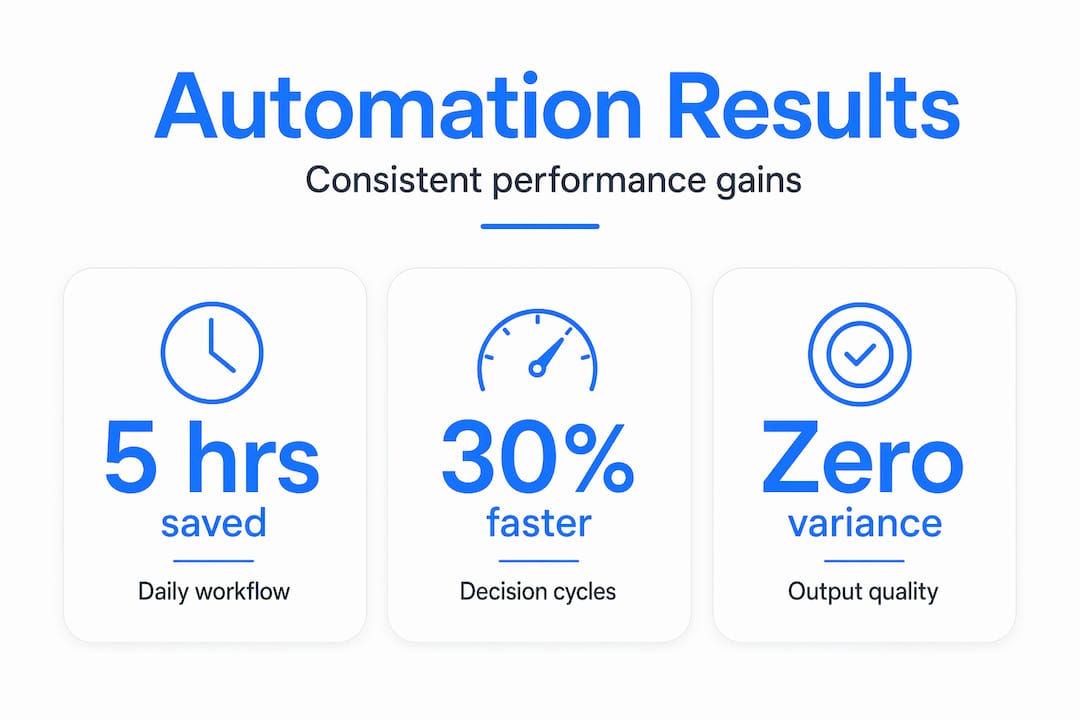
AI augments jobs by handling repetitive, structured decisions, which shifts human attention toward strategic work. That's the real benefit of automated decisions. Not replacing people, but redirecting their focus toward work that actually requires judgment, creativity, and relationship management.
Common pitfalls when implementing automated decisions
The technology itself rarely fails first. Organizations fail first. Only 24% of Fortune 1000 companies have truly integrated data and AI into their culture, despite 90.5% claiming it as a priority. That gap tells you something important: technical solutions don't fix organizational problems.
Here are the most common failure points to watch for:
- Analysis paralysis: Teams collect data endlessly but never commit to acting on it. More dashboards don't produce better decisions. At some point, good enough data with a decision beats perfect data with paralysis.
- Ignoring decision provenance: Most organizations track what their automated system decided. Almost none track why it decided that way. Capturing decision reasoning at the moment it happens is what makes your system auditable and improvable. Without it, you're accumulating outcomes, not institutional memory.
- Over-automating without oversight: Not every decision should be fully automated. Sensitive customer interactions, high-stakes financial choices, and situations involving unusual context still need a human in the loop. Automation without escalation paths creates accountability gaps.
- Departmental silos: When finance, operations, and customer teams each build separate automated systems without shared data standards, you end up with conflicting outputs. The decisions your automated system makes in one department directly contradict what another department is doing.
- Cultural resistance: Teams that feel threatened by automation slow adoption quietly. They find workarounds, override automated outputs, and undermine the system without ever raising a formal objection.
Pro Tip: When rolling out automated decisions, run a parallel period where humans make the same decisions alongside the system. Compare outcomes openly. Nothing builds team trust faster than seeing the data prove the system works, and nothing exposes flaws faster either.
When it comes to adoption challenges in financial organizations, the human side consistently outweighs the technical side as the primary obstacle.
Best practices for integrating automation into decision workflows
Getting this right requires more than picking the right software. It requires rethinking how decisions flow through your organization.
-
Start with workflow redesign, not tool selection. Map out every decision your team currently makes in a given process. Identify which ones are rule-following, which require judgment, and which involve pattern recognition. The first category is ready to automate. The second and third need human involvement or advanced AI with clear guardrails.
-
Build in task chaining intentionally. Chaining AI-friendly tasks in sequence consistently outperforms isolated automation. When one automated step triggers the next without human coordination, you eliminate handoff delays. A payment reminder that triggers a follow-up based on response behavior, which then escalates or resolves automatically, saves more time than any single automated reminder ever could.
-
Use a three-layer architecture. Successful automation depends on three distinct layers working together: Data Trust (clean, reliable inputs), Analytics and AI (interpretation and pattern recognition), and Decision Governance (explainability and auditability). Skip any one of those layers and the whole system becomes unreliable.
-
Build leadership accountability into the process. Building a data-driven culture requires top-down commitment, cross-department collaboration, and genuine tolerance for testing and adjusting. Leaders who frame automation as a cost-cutting tool rather than a decision-quality tool consistently see lower adoption and worse outcomes.
-
Establish feedback loops from day one. Your automated system should track its own outcomes and surface that data back to decision-makers on a regular cadence. If payment recovery rates drop, the system should flag it. If customer response rates shift, the model should update.
The comparison that matters here is not "automated system vs. human judgment" but rather "consistent, data-informed decisions at scale vs. inconsistent, time-pressured decisions made by exhausted people." The latter is what most businesses are running on right now.
Where data-driven automation is heading
The trajectory is clear. AI agents, systems that don't just assist decisions but take sequences of actions autonomously, are moving from experimental to operational across industries. The question for business owners is not whether to engage with this shift but how to do it thoughtfully.
"The companies that will gain the most from AI-driven automation are not the ones that automate the most tasks. They're the ones that build the best systems for capturing and learning from every decision they make."
AI-driven work redesign is shifting human roles toward judgment-intensive tasks across every sector that has adopted it seriously. That shift carries real implications for hiring, training, and performance management. The roles that remain distinctly human will require more sophisticated skills, not fewer.
Accountability and auditability will become regulatory requirements in many sectors before long. Building your decision governance layer now, before regulators mandate it, gives you a real advantage. Organizations that can demonstrate a clear record of why automated systems made specific choices will navigate compliance with far less friction than those scrambling to reverse-engineer their logic after the fact.
Ethical considerations around automated decisions, particularly in credit, healthcare, and hiring, are also moving from philosophical debate to legal reality. Bias in training data produces biased automated decisions. That's not a technology problem. It's a data problem, which means the organizations that treat data quality as a core operational priority now will be better protected later.
My take on the real challenge most organizations miss
I've spent a lot of time watching organizations invest heavily in data infrastructure and automation tools, then wonder why the results don't match the promise. In my experience, the gap is almost never technical. It comes down to decision provenance. Teams are so focused on what the system decides that they never build the habit of recording why a decision was made, what constraints were in place, and who had authority over it.
When you don't capture that context, your automated system has no institutional memory. Every new situation starts from scratch. You can't audit it, you can't improve it, and you definitely can't defend it if something goes wrong. I've seen organizations avoid this by building a simple decision log into every automated workflow from the start. Not a complicated system. Just a structured record that travels with every automated action.
The other thing I'd push back on is the assumption that more data automatically means better decisions. I've watched teams paralyze themselves chasing a complete data picture while competitors with less data but clearer decision frameworks moved faster and won. The goal is not perfect information. The goal is consistent, auditable, and improvable decisions made at the right moment.
— Tyler
How Interval-ai puts this into practice for your business
If you're managing overdue payments and collections, the principles in this article are exactly what Interval-ai is built on. Instead of applying the same message to every customer, Interval-ai uses historical payment data to tailor outreach timing, channel, and tone to each account. That's data analytics in automation working in real time, not a static ruleset.
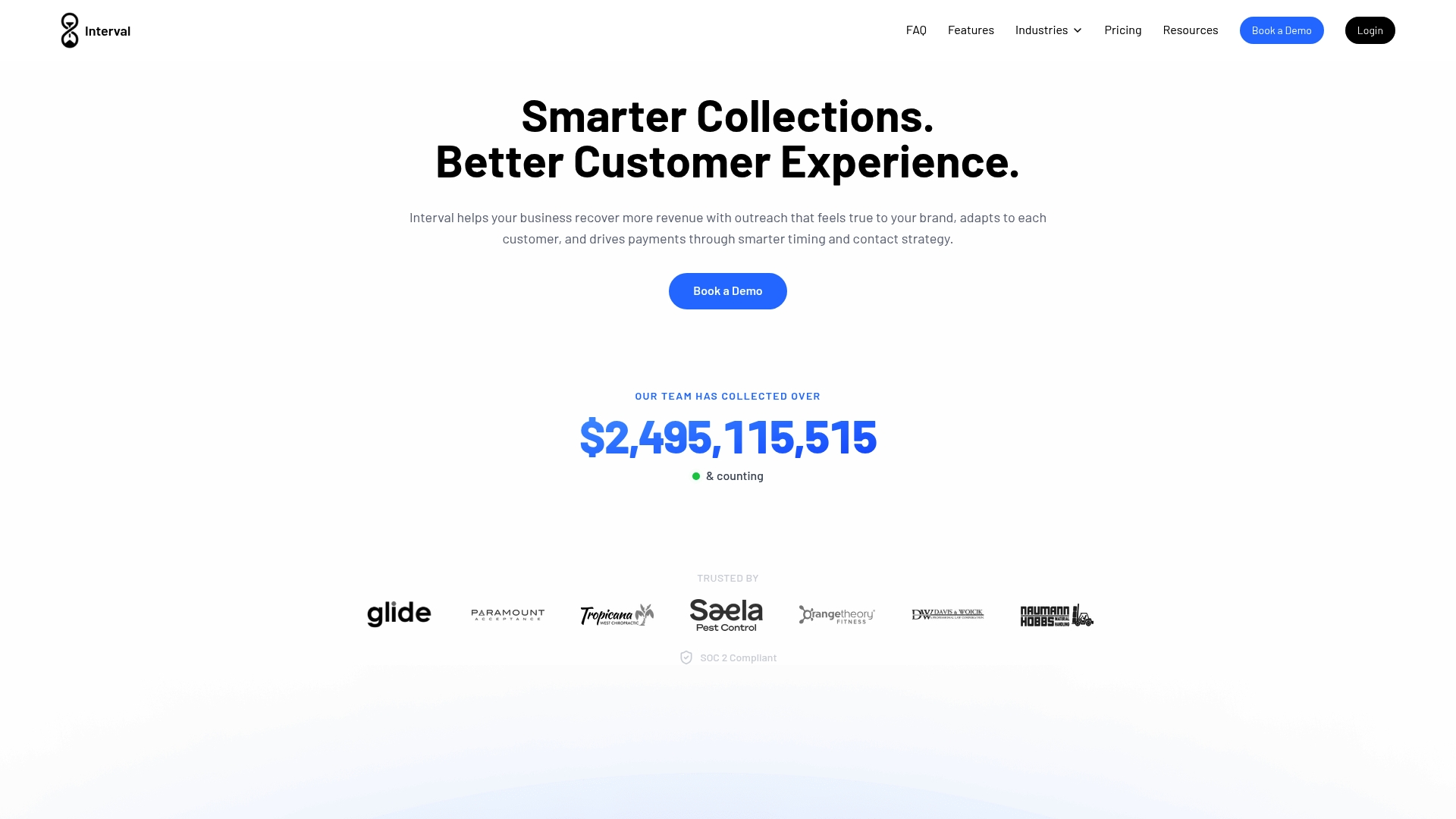
Clients using Interval-ai report recovering payments over 30 days faster and saving thousands in payroll costs by removing the need for dedicated collections staff. The system manages follow-up across channels automatically, maintains your brand's professional tone, and creates a clear record of every communication. If you want to see how data-driven decision making works in a context that directly affects your cash flow, Interval-ai is worth a serious look.
FAQ
What is the role of data-driven automation decisions?
Data-driven automation decisions use real-time and historical data to guide automated systems in taking actions without human intervention at every step. The role is to make consistent, informed, and scalable choices that would otherwise require significant manual effort.
How does automation in decision processes differ from traditional automation?
Traditional automation follows fixed rules regardless of context. Data-driven automation adapts based on patterns, history, and analytics, producing decisions that respond to the specific situation rather than applying a one-size-fits-all response.
What are the biggest risks of implementing automated decisions?
The biggest risks are poor data quality feeding bad outputs, lack of decision provenance making systems unauditable, and cultural resistance causing teams to override or ignore automated recommendations. Oversight and governance structures reduce all three.
How does data-driven decision making improve operational efficiency?
By automating routine decisions consistently and at scale, organizations reduce delays, lower error rates, and free staff for higher-value work. Workers using AI-assisted tools save one to five hours daily, which adds up quickly across teams.
Do automated decisions replace human judgment entirely?
No. The most effective implementations use automation for structured, repeatable decisions while keeping humans accountable for high-stakes, context-sensitive situations. The goal is augmentation, not replacement.
