
Types of Customer Communication Automation: 2026 Guide
Published: June 27, 2026 · 10–11 min read
TL;DR:
- Customer communication automation uses technology to handle inquiries across multiple channels without needing human agents. Selecting the correct automation type based on data, deployment sequence, and proper training ensures maximum ROI and customer satisfaction. Combining automation with seamless human handoffs improves efficiency while maintaining quality.
Customer communication automation is defined as technology that handles customer inquiries across chat, email, phone, and social media channels without requiring a human agent for every interaction. The five core types of customer communication automation are AI chatbots, self-service knowledge bases, email autoresponders, IVR phone systems, and social media auto-replies. Each type serves a different channel and customer behavior pattern. Tools like Massively, Twilio, and Sinch have made these systems accessible to small and medium businesses at a fraction of what enterprise deployments once cost. Understanding which type fits your business is the difference between a smart investment and an expensive distraction.
1. what are the main types of customer communication automation?
The five types of automated messaging each solve a different problem, and they are not interchangeable. Picking the wrong one for your channel wastes budget and frustrates customers.

AI Chatbots
AI chatbots handle real-time text conversations on your website, app, or messaging platforms like WhatsApp. They are the most capable type for handling complex questions because they can be trained on your product catalog, FAQs, and brand voice. Setup takes 1–5 days, and monthly costs run $29–$500 depending on features and conversation volume. Chatbots deploy fastest among all automation types and operate 24/7 without additional staffing.
Self-Service Knowledge Bases
A knowledge base is a searchable library of articles, guides, and FAQs that customers access on their own. It reduces repeat questions by letting customers find answers before they ever contact your team. Setup takes 2–4 weeks because you need to write, organize, and publish content. The cost is low, often included in help desk platforms like Zendesk or Freshdesk. The payoff is long-term: every article you publish deflects future support tickets.
Email Autoresponders and Ticketing Systems
Email automation handles the most common B2B communication channel. When a customer submits a request, the system sends an instant acknowledgment, routes the ticket to the right team, and triggers follow-up sequences based on status. Setup takes 1–3 days, and costs run $15–$200 per month. This type handles partial automation well. It does not resolve issues on its own, but it keeps customers informed and prevents tickets from falling through the cracks.
IVR Phone Systems
Interactive Voice Response (IVR) systems greet callers, collect information through voice or keypad input, and route them to the right department. They work best for businesses that receive high call volumes, such as healthcare practices, utilities, or service companies. Setup takes 1–2 weeks, and monthly costs range from $50–$400. IVR handles routing and basic information well, but it struggles with complex or emotional customer situations.
Social Media Auto-Replies
Social media auto-replies send instant responses to direct messages on platforms like Instagram, Facebook, and X (formerly Twitter). They are the fastest to set up, often within hours, and cost $0–$100 per month. They handle basic inquiries like store hours, pricing, or links to your website. For businesses with high DM volume, they prevent the silence that reads as permission to wait.
| Type | Best For | Setup Time | Monthly Cost | Complexity Handling |
|---|---|---|---|---|
| AI Chatbot | Web chat, high volume | 1–5 days | $29–$500 | High (with training) |
| Knowledge Base | Self-service, repeat questions | 2–4 weeks | Low/included | Medium |
| Email Autoresponder | B2B, ticket management | 1–3 days | $15–$200 | Partial |
| IVR Phone System | High call volume businesses | 1–2 weeks | $50–$400 | Low to medium |
| Social Media Auto-Reply | DM-heavy brands | Hours | $0–$100 | Basic |
2. how to choose the right automation for your channels
The most common mistake SMEs make is automating the wrong channel first. You should audit your contact distribution across all channels before spending a dollar on tools. Pull 90 days of data from your inbox, phone logs, live chat, and social accounts. Find out where the volume actually lives.
Once you have that data, deploy in this sequence:
- Start with AI chat for your highest-volume, low-complexity channel. Web chat is usually the right first move for most SMEs.
- Add a knowledge base to support the chatbot. When the bot cannot answer a question, it should point customers to a relevant article rather than dead-ending the conversation.
- Integrate email automation for unresolved requests that need follow-up. Connect your ticketing system to your CRM so agents have full context.
- Consider IVR only if phone calls represent a significant share of your contact volume after 90 days of data.
- Add social automation last, and only if your DM volume justifies the setup time and ongoing maintenance.
Sequential deployment reduces upfront costs and maximizes return on investment by aligning your spending with actual usage data. Businesses that skip this step often end up with five tools running at 20% capacity.
Pro Tip: Before you sign any contract, map your top 20 most common customer questions. If more than 15 of them are repetitive and factual, an AI chatbot will deliver the fastest payoff.
Correct channel selection also protects your customer experience. Automating a low-volume channel adds friction without reducing workload. Automating a high-volume channel with the right tool cuts response times and frees your team for the conversations that actually require a human.
3. benefits and challenges of communication automation
The operational case for automation is strong. Well-implemented automation handles 60–80% of routine inquiries without human involvement. That means your team spends less time answering the same five questions and more time on the complex cases that build customer loyalty.
Key benefits include:
- Faster response times across all channels, including outside business hours
- Consistent, professional messaging that reflects your brand every time
- Reduced staffing costs for repetitive, low-value interactions
- Freed-up agent time for relationship-driven work that increases customer lifetime value
The challenges are real, though, and worth planning for before you launch.
"A major cause of customer dissatisfaction is automation dead ends. Successful systems include seamless human agent escalation with full conversation context so customers never have to repeat themselves."
The biggest pitfall is deploying an AI chatbot without proper training. Generic large language models do not know your products, your policies, or your tone. Training AI on internal FAQs and brand materials before launch is the single most important step to prevent off-brand or inaccurate responses. Skipping this step is the fastest way to lose customer trust.
The second pitfall is building automation without a clear human handoff. If a customer reaches a point the bot cannot handle and there is no path to a live agent, they leave frustrated. Seamless human handoff with full conversation history is not optional. It is the feature that separates automation that helps from automation that harms.
Pro Tip: Set a clear escalation trigger in your chatbot. If a customer uses words like "frustrated," "cancel," or "urgent," route them to a live agent immediately. Do not let the bot keep trying.
Budget is also a real consideration for SMEs. Start with one tool, prove the ROI, and expand. Do not try to automate every channel at once.
4. emerging trends in customer interaction automation
Customer engagement automation is moving fast in 2026. The tools available today are significantly more capable than what existed two years ago, and the gap between enterprise and SME access is closing.
The four trends shaping the next phase of automation:
- AI voice agents are replacing traditional IVR systems. Instead of pressing 1 for billing, customers speak naturally and the system understands context. Platforms like Twilio and Sinch are building these capabilities directly into their existing products.
- Omnichannel orchestration is becoming the standard expectation. Customers want to start a conversation on chat and continue it by email without repeating themselves. Unified orchestration layers that integrate CRM and ERP data into messaging channels make this possible.
- Personalization at scale is moving beyond using a customer's first name. Automation tools now pull purchase history, account status, and past interactions to tailor every message. This requires clean data and a connected tech stack.
- Human augmentation is the dominant philosophy replacing full automation. The goal is not to remove humans from customer service. The goal is to handle repetitive tasks automatically so human agents focus on the work that actually requires judgment and empathy.
Faster deployment tools are also reducing the barrier to entry. What once required a developer and six weeks of setup now takes a few days with modern no-code platforms. For SMEs, this means you can test, learn, and adjust without a large upfront commitment.
Integrated automation systems that operate as connected platforms rather than isolated tools deliver better personalization and stronger compliance outcomes. Businesses that treat automation as a single connected system outperform those running disconnected point solutions.
Key takeaways
The most effective approach to customer communication automation is sequential deployment, starting with the highest-volume channel and expanding only after validating ROI with real usage data.
| Point | Details |
|---|---|
| Match type to channel | Choose your automation type based on where your customers actually contact you most. |
| Deploy sequentially | Start with AI chat, then add knowledge base, email, IVR, and social in order of volume. |
| Train before you launch | Feed your AI chatbot your FAQs, product docs, and brand voice before going live. |
| Always enable human handoff | Build escalation paths with full conversation history to prevent dead ends. |
| Audit first, spend second | Pull 90 days of contact data before committing to any communication automation tool. |
What i've learned about automation that most guides skip
Most articles on this topic will tell you to "start with chatbots" and leave it at that. The advice is not wrong, but it skips the part that actually determines whether the investment pays off.
The businesses I have seen get the most from communication automation share one habit: they are obsessive about their data before they buy anything. They know exactly how many emails come in per week, what percentage are billing questions versus technical issues, and which channel their customers prefer at 9 PM on a Sunday. That specificity is what drives smart tool selection.
The second thing they get right is training. A chatbot running on generic AI with no knowledge of your products is worse than no chatbot at all. It gives confident wrong answers, and customers remember that. The businesses that win with AI chatbots spend real time loading their internal documentation, writing clear FAQ entries, and testing edge cases before launch.
The third thing, and the one most SMEs skip entirely, is the handoff. I have seen well-funded automation setups fail because there was no clear path from bot to human. Customers hit a wall, got no resolution, and left. The fix is simple: define your escalation triggers, connect your bot to your ticketing system, and make sure the agent sees the full conversation history. Customers should never have to repeat themselves.
Automation is not a replacement for good customer service. It is a way to deliver consistent, professional responses at scale while your team focuses on the conversations that actually require a human. That framing changes how you build it, and it changes the results you get.
— Tyler
How Interval-ai handles the automation work for you
If you are managing overdue payments alongside daily customer communication, the workload adds up fast. Interval-ai is built specifically for businesses that need automated outreach to work across multiple channels without adding headcount.
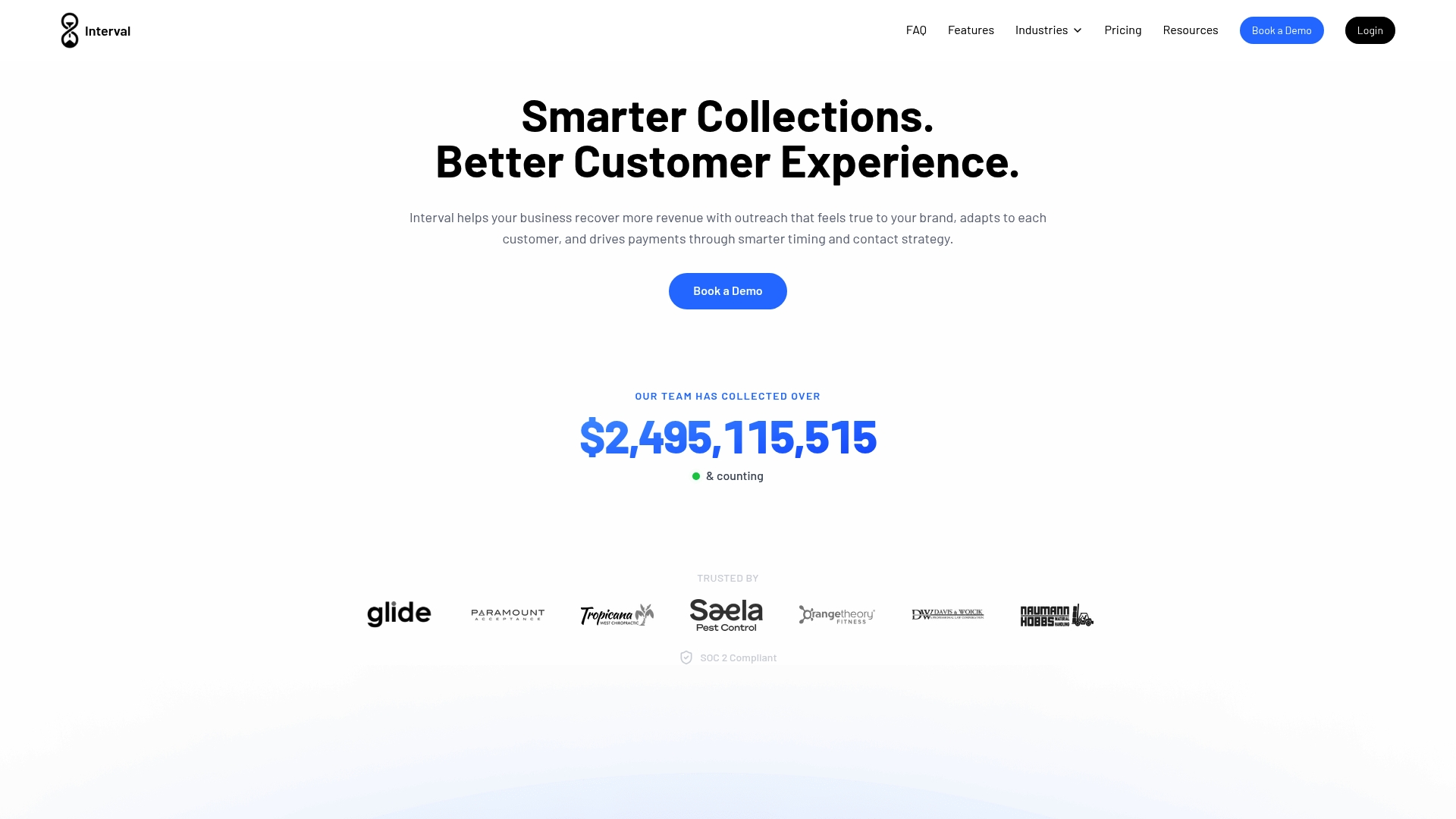
Interval-ai uses historical payment data to tailor every follow-up message to the individual customer, so your outreach stays on-brand and contextually relevant. The system manages communication across channels automatically, reducing days to payment by over 30 days according to client results. SMEs using Interval-ai report recovering significant receivables while saving thousands in payroll costs. If you want to see how automated collections communication fits your operation, explore Interval-ai and request a walkthrough.
FAQ
What is customer communication automation?
Customer communication automation is technology that handles customer inquiries across chat, email, phone, and social media without requiring a human agent for every interaction. The most common types include AI chatbots, email autoresponders, IVR systems, and social media auto-replies.
How much of routine customer service can automation handle?
Well-configured automation handles 60–80% of routine inquiries automatically, leaving human agents free to focus on complex or high-value cases.
What is the fastest type of automated messaging to deploy?
Social media auto-replies deploy in hours, and AI chatbots typically go live within 1–5 days. A self-service knowledge base takes the longest, requiring 2–4 weeks to build and publish content.
How do i choose the right automation type for my business?
Audit your customer contact data across all channels for at least 90 days, then automate your highest-volume channel first. Expand to other channels only after confirming the first tool delivers measurable ROI.
What is the biggest risk of communication automation?
The biggest risk is automation dead ends, where customers reach a point the system cannot handle and have no path to a live agent. Always build a seamless human handoff with full conversation history to prevent customer frustration.
