
Omnichannel Collections Automation: What Finance Leaders Need
Published: August 12, 2026 · 11–12 min read
Omnichannel collections automation is an AI-driven system that coordinates email, SMS, voice, payment portals, and reconciliation into a single orchestrated workflow to recover overdue payments faster and with less manual effort. For finance managers and business owners, the payoff is concrete: lower days sales outstanding (DSO), higher touchless payment rates, and a measurable reduction in collections labor costs. Small businesses across the U.S. are losing thousands to unpaid invoices, and silence from your AR team reads as permission for customers to wait. This article explains how the system works, what it costs to ignore, and how to implement it well.
Key Takeaways
Omnichannel collections automation reduces DSO, raises touchless payment rates, and lowers collections labor costs by coordinating AI-driven outreach across email, SMS, voice, and payment portals in a single workflow.
| Point | Details |
|---|---|
| Core definition | AI orchestrates email, SMS, voice, and portals to automate AR outreach and cash application end-to-end. |
| Top 3 KPIs to track | DSO, touchless payment rate, and cost-per-dollar-collected measure program health and ROI. |
| Implementation priority | Fix canonical invoice IDs and integration webhooks before go-live; data quality drives automation accuracy. |
| Compliance checkpoint | TCPA consent records and A2P SMS registration are required before sending automated texts at volume. |
| Interval-ai next step | Interval-ai reduces days to payment by 30+ days; request a demo to see projected outcomes for your AR. |
What is omnichannel collections automation and how does it work?
The architecture has four layers. Your system of record, typically an ERP or general ledger, holds the invoice data. An orchestration layer reads that data, applies AI-driven decisioning, and routes outreach through channel adapters: email, SMS, voice, and a self-service payment portal. Payment processors capture transactions, and a reconciliation engine matches payments back to open invoices and updates the ledger automatically.
Bill three core AI components that do the heavy lifting inside that orchestration layer:
| AI Component | What It Does in AR | Why It Matters |
|---|---|---|
| NLP (Natural Language Processing) | Reads and classifies inbound customer replies, dispute notices, and payment confirmations | Routes messages to the right workflow without manual triage |
| Predictive analytics | Scores each customer's propensity to pay based on payment history and behavior signals | Prioritizes outreach and selects the right channel and tone |
| Cognitive automation | Applies escalation rules, generates follow-up messages, and triggers settlement offers | Keeps the workflow moving without a human decision at every step |
| Automated cash application | Matches remittances to open invoices using OCR and pattern recognition | Reduces reconciliation errors and closes the loop on payment posting |
Critical integrations are your ERP or GL, your payment gateway, your CRM for customer contact data, and your bank feeds for cash-application matching. Webhooks and event-driven APIs keep these systems near-real-time, so a payment posted at 2:00 PM stops the 3:00 PM reminder before it sends.
FICO documents that a coordinated omnichannel approach, where every channel shares context, improves right-party contact, increases self-service payments, and in select deployments has cut delinquency rates by as much as 40% and collections costs by roughly 15%.
What are the real benefits for your finance team?
Auxis positions AR automation as a strategic priority that speeds the invoice-to-cash cycle, reduces manual errors, and gives finance teams the forecasting visibility they need to manage liquidity. The operational benefits fall into three categories.
Metric-level wins:
- DSO drops because reminders go out on schedule, not when someone remembers to send them.
- Collection rates on 30-to-60-day buckets improve when outreach starts early. The Kaplan Group notes that recovery rates deteriorate sharply after 60–90 days, making early-stage automation the highest-leverage intervention.
- Touchless payment rates rise when customers receive a direct portal link and can pay in two clicks.
Operational wins: Fewer manual reconciliations, predictable cash flow, and staff redeployment from routine follow-up to exceptions and dispute resolution.
Customer-facing wins: Personalized, channel-appropriate outreach that matches the customer's communication preference preserves the relationship. A customer who prefers SMS does not want a robocall.
Stat to know: Top-performing small businesses using automated invoice collection workflows report DSO reductions in the 30–45% range versus manual baselines.
What do typical omnichannel collections workflows look like?
A standard end-to-end sequence runs like this: invoice issued on day 0, a friendly email reminder on day 3, an SMS nudge with a payment link on day 7, a voice message on day 14 if no payment posts, a settlement or payment-plan offer on day 30, and escalation to a senior AR contact or external process on day 45+.

Branching is what separates automation from a simple drip sequence. When a customer replies to the day-7 SMS with "I already paid," the NLP layer classifies that as a potential dispute, pauses outreach, and opens a dispute-resolution workflow. When a payment posts, the system cancels all pending reminders for that invoice immediately. When a customer clicks the portal link but does not complete payment, a cart-abandonment-style nudge goes out within 24 hours.
For accounting workflow automation patterns across different business sizes, the cadence adjusts by customer tier. High-value accounts may get a personal phone call from an AR rep at day 10 before any automated escalation. Low-balance, high-volume accounts run fully automated through day 45. The key is that the orchestration layer handles the routing logic, not your staff.
How do you implement omnichannel collections automation?
Run through this checklist before you go live.
Preflight data checks:
- Confirm every invoice has a canonical ID that matches across your ERP, CRM, and payment gateway.
- Verify remittance fields are populated consistently so the cash-application engine can match payments.
- Audit customer contact data: email deliverability, mobile number format, and communication preferences.
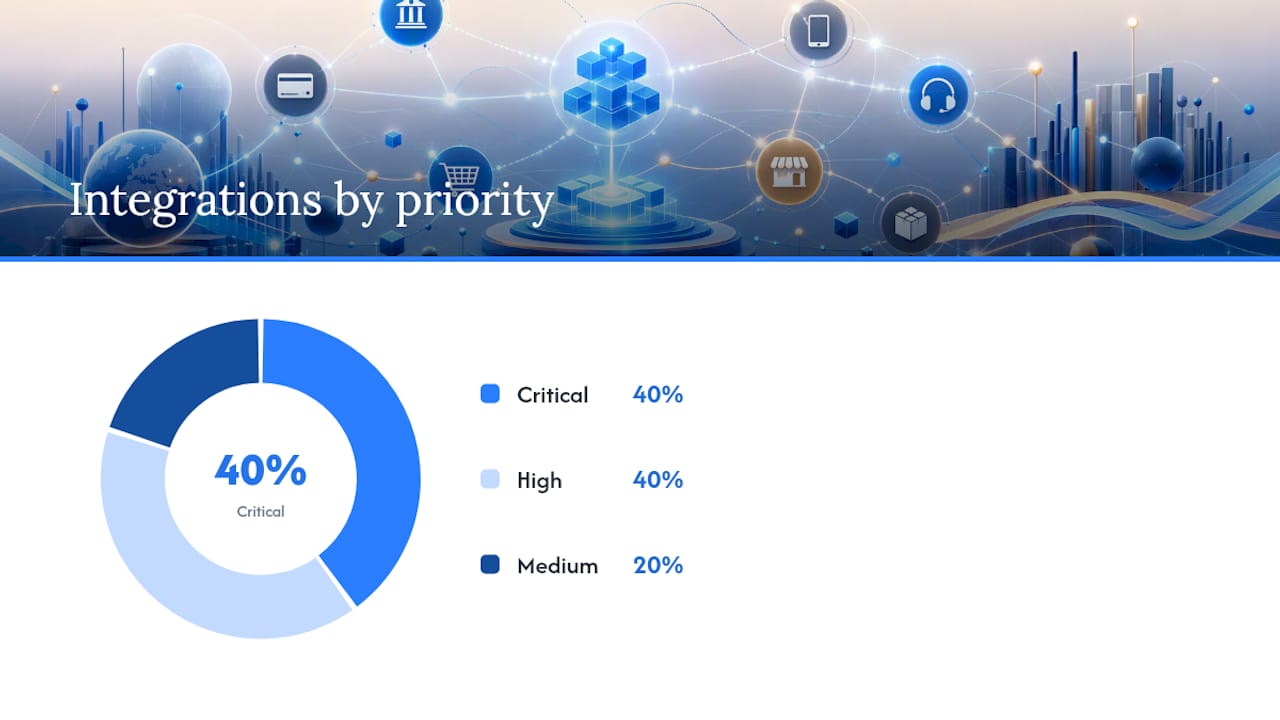
Integrations to prioritize:
| Integration | Priority | What Breaks Without It |
|---|---|---|
| ERP / GL | Critical | No invoice data, no workflow triggers |
| Payment gateway | Critical | Payments don't close open invoices automatically |
| CRM | High | Contact data gaps cause misrouted outreach |
| SMS / voice provider | High | Channel coverage drops to email only |
| Bank feeds | Medium | Cash application reverts to manual matching |
Operational readiness: Assign a dedicated exception handler for disputes and escalations. Define escalation thresholds before go-live. NetSuite recommends continuous model monitoring and retraining as transaction volumes and economic conditions change, so build a monthly model-review step into your calendar from day one.
Pro Tip: Run your first pilot on a single aging bucket (31–60 days) with 100–200 accounts. A contained cohort gives you clean before-and-after DSO data without risking your full AR portfolio.
What U.S. compliance considerations should you check first?
Collections automation in the U.S. carries real regulatory exposure if you skip the legal review step.
- TCPA: Automated calls and texts to cell phones require prior express written consent. A2P 10DLC registration is required for business SMS campaigns sent at volume.
- FDCPA: Applies primarily to third-party debt collectors, but some states extend similar obligations to first-party creditors. Confirm your scope with counsel.
- State-level rules: Several states have stricter communication frequency limits and opt-out requirements than federal law. California, New York, and Texas each have nuances worth reviewing.
- PCI DSS: Any payment data flowing through your system must be tokenized. Never store raw card numbers in your CRM or ERP.
- Dispute handling: Document your dispute-resolution SLA and log every dispute event. Regulators look for evidence of a consistent, auditable process.
Include opt-out rates, dispute rates, and consent-record completeness in your compliance dashboard from day one. These are not just legal hygiene items; they are leading indicators that your cadence is too aggressive or your targeting is off.
How do you measure success with the right KPIs?
Day-1 dashboard (operational, reviewed daily):
- Touchless payment rate by channel
- Reconciliation error rate
- Opt-out and dispute volume
Weekly operational report:
- DSO by aging bucket (current, 1–30, 31–60, 61+)
- Days-to-payment by customer segment
- Collection rate on 31–60 and 61–90 day buckets
- Cost-per-dollar-collected
Monthly finance review:
| KPI | What It Tells You | Target Direction |
|---|---|---|
| DSO | Overall AR health and cash conversion speed | Decreasing |
| Touchless rate | Automation effectiveness and portal adoption | Increasing |
| Dispute cure rate | Quality of outreach and reconciliation accuracy | Increasing |
| Cost-per-dollar-collected | Operational efficiency of the program | Decreasing |
Model drift is a real risk as payment behavior shifts. Schedule quarterly accuracy checks on your predictive scoring model and review reconciliation error rates after any ERP upgrade or payment gateway change.
How do you choose the right vendor for your AR team?
Evaluate vendors on five criteria.
Integration depth: Can the vendor connect directly to your ERP and bank feeds, or does it require a middleware layer you have to build and maintain? Direct connectors reduce implementation time and failure points.
Cash-application accuracy: Ask for real-world reconciliation accuracy rates on accounts similar to yours in volume and complexity. A vendor who cannot give you a number is telling you something.
Channel coverage: You need email, SMS, voice, and a branded payment portal at minimum. Confirm that all four are native, not bolted-on third-party modules with separate SLAs.
Compliance posture: Verify A2P registration support, consent-record storage, and PCI tokenization are built in, not optional add-ons.
Pricing alignment: Subscription pricing tied to AR volume or number of accounts handled is the model that scales fairly. Avoid per-message pricing at high volumes; it creates a perverse incentive to send more messages, not better ones.
In demos, ask: What is your average touchless rate across clients in my industry? How quickly can I adjust escalation thresholds without an engineering ticket? What is your SLA for model retraining when accuracy drops?
How Interval-ai applies omnichannel collections automation
Interval-ai's platform matches the architecture described above: an AI orchestration layer connects to your accounting system and CRM, then manages outreach across email, SMS, voice, and a self-service payment portal. The AI engine uses historical payment data to tailor contact strategy per customer, so high-risk accounts get earlier, more frequent touchpoints while reliable payers receive lighter-touch reminders.
Clients report measurable outcomes consistent with the benchmarks in this article:
- Reductions in days to payment of more than 30 days versus pre-automation baselines.
- Payroll cost savings from eliminating manual follow-up tasks, with clients reporting thousands saved per year.
- Higher touchless rates as customers use the portal link rather than calling in to pay.
Interval-ai clients recover substantial overdue balances without adding headcount, which is the core operational promise of well-implemented AR automation.
Interval-ai also supports multilingual outreach and is built to maintain brand consistency in every customer-facing message, so your collections communications feel like a natural extension of your business rather than a third-party agency notice.
Your 90-day plan for launching an omnichannel pilot
Days 1–30: Pull a data quality report on your AR file. Fix canonical invoice IDs, clean contact records, and confirm your ERP and payment gateway can expose the webhooks the orchestration layer needs. Select your pilot cohort (31–60 day bucket, 100–200 accounts). Align your finance, sales, legal, and IT stakeholders on escalation rules and compliance requirements before a single message goes out.
Days 31–60: Run the pilot. Monitor your day-1 dashboard daily. Tune cadence timing and escalation thresholds based on opt-out rates and payment response patterns. Validate that reconciliation is posting correctly against your GL. Compare DSO for the pilot cohort against your control group.
Days 61–90: Scale the winning cadence to your full AR portfolio. Formalize SLAs for exception handling and dispute resolution. Train your AR team on the exception queue so they focus on the accounts that genuinely need human judgment. Schedule your first quarterly model-accuracy review.
The role of AI in financial operations is shifting finance teams from reactive responders to proactive advisors, and a 90-day pilot is the fastest way to prove that shift in your own numbers.
Interval-ai helps you recover overdue payments faster
Cutting DSO by 30+ days without adding staff is the outcome finance managers ask about most, and it is exactly what Interval-ai is built to deliver. The platform maps directly to the checklist and KPIs covered in this article: it connects to your accounting system, automates outreach across every channel your customers actually use, and posts payments back to your ledger without manual intervention.
You can see the full workflow in a live demo tailored to your AR volume and customer mix. Request a demo at Interval-ai and get a clear picture of what your DSO and touchless rate could look like 90 days from now.
Sources
- How Omni-Channel Communications Transform Collections Strategy
- What Is AI in Accounts Receivable? Process, Benefits and Trends
FAQ
What is omnichannel collections automation in simple terms?
It is an AI-driven system that sends payment reminders across email, SMS, voice, and a payment portal in a coordinated sequence, then automatically matches incoming payments to open invoices without manual intervention.
How is this different from basic invoice reminders?
Basic reminders are single-channel and manual. Omnichannel automation uses predictive scoring to decide which channel, timing, and message each customer receives, and it branches the workflow based on customer responses and payment events in near-real-time.
What DSO improvement can I realistically expect?
Top-performing small businesses using automated collection workflows report DSO reductions in the 30–45% range versus manual baselines, though results depend on data quality, integration depth, and cadence tuning.
Does automated collections outreach require legal review in the U.S.?
Yes. TCPA requires prior express written consent for automated texts and calls to cell phones, and A2P 10DLC registration is required for business SMS at volume. A brief legal review before go-live is a practical requirement, not optional.
How does Interval-ai fit into this framework?
Interval-ai implements the full omnichannel AR architecture described here, connecting to your accounting system and automating outreach across all channels. Clients report reductions in days to payment of more than 30 days and meaningful payroll savings from eliminating manual follow-up.
