
Why Pest Control Needs Collections Software Now

Published: July 15, 2026 · 9–10 min read
TL;DR:
- Collections software automates invoicing and payment recovery for pest control businesses to improve cash flow. It reduces manual labor, speeds up payments, and enhances revenue recovery through timely reminders and integrated payment processing. Implementing such systems can lead to faster collections, lower administrative costs, and more predictable revenue streams.
Collections software for pest control is defined as an integrated billing and payment recovery system that automates invoicing, follow-up reminders, and payment posting within field service operations. Manual billing costs pest control companies real money. Businesses spending over 10 admin hours weekly on manual billing tasks lose roughly $800 per month in labor alone. That figure does not include revenue lost to uninvoiced jobs or delayed invoices. Understanding why pest control needs collections software starts with recognizing that the problem is not customers refusing to pay. The problem is an administrative structure that makes it easy to fall behind.
Why pest control needs collections software to fix billing workflows
The most common billing workflow in small pest control operations looks like this: a technician completes a job, notes it on paper or in a disconnected app, and someone in the office manually creates an invoice hours or days later. That gap between service and invoice is where cash flow problems begin. Longer unpaid invoices reduce customer urgency, and the longer a customer waits to receive a bill, the less motivated they feel to pay it quickly.
Collections software solves this by triggering invoices automatically at job completion. When your field service software and billing system share the same data, the invoice goes out the moment the technician marks the job done. Automated invoicing keeps cash flow velocity high and customer urgency at its peak. You do not need to remind your office staff to send a bill. The system handles it.
Real-time operational reporting is another benefit that manual systems cannot replicate. You can see which accounts are current, which are aging, and which need escalation, all from one dashboard. Integrated payment processing automates payment posting too, so your books update without anyone manually reconciling transactions.
- Invoices generate automatically at job completion, not hours later
- Payment posting updates your records without manual data entry
- Real-time dashboards show aging accounts at a glance
- Stored payment methods allow one-click or automatic payment collection
Pro Tip: If your field service software and billing platform do not share data natively, every sync is a chance for an error. Disconnected systems create duplicate entries, missed invoices, and reconciliation headaches. Choose tools that integrate at the data level, not just through a third-party export.
How early reminders and structured follow-ups recover more revenue
The timing of your first payment reminder matters more than most pest control owners realize. Experts recommend starting reminders within 5–7 days after the invoice due date. Waiting two or three weeks to follow up signals to customers that the debt is not urgent. Silence reads as permission to wait.
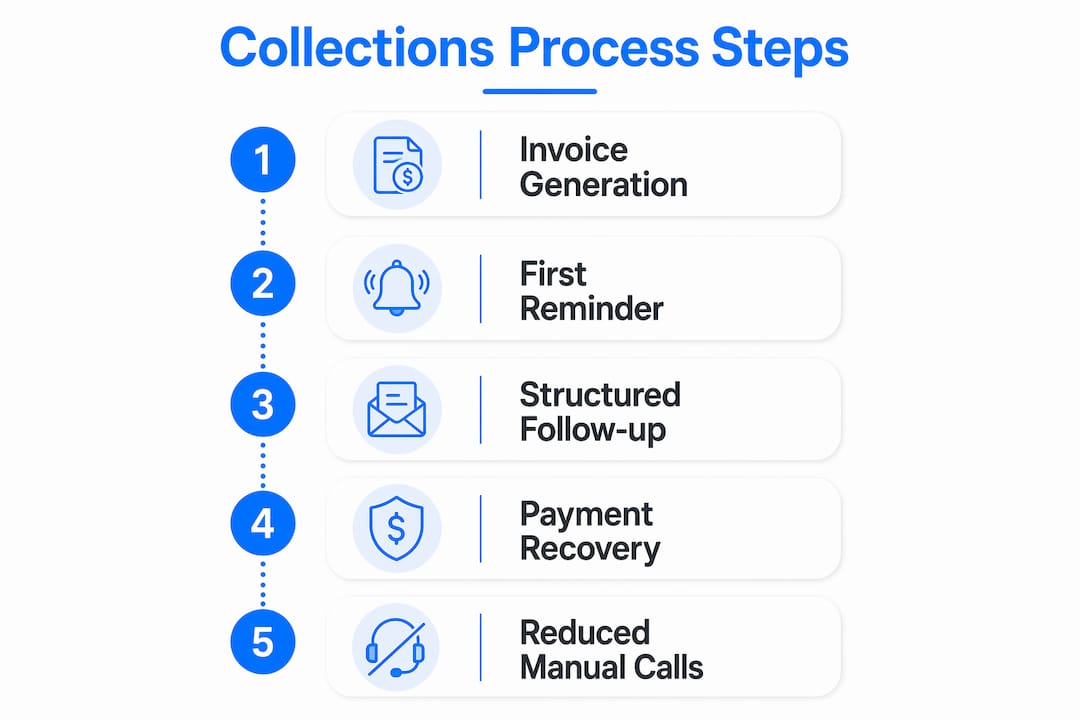
Collections software schedules these reminders automatically based on invoice age. A customer who has not paid by day five gets a friendly SMS with a payment link. By day ten, they receive an email. By day fifteen, a call is triggered. Automated follow-ups use scheduled calls, SMS, and emails with payment links tied to aging accounts, replacing the manual tracking your office staff currently handles.
This multi-channel approach also protects customer relationships. A consistent, professional reminder feels very different from a frustrated phone call from an owner chasing a late payment. The tone stays friendly, the message stays clear, and the customer retains the dignity of a simple payment link rather than an awkward conversation.
Best practices for scheduling automated reminders:
- Send a payment confirmation immediately after the invoice is generated
- Send a friendly reminder on the due date itself
- Follow up within 5–7 days post due date via SMS with a direct payment link
- Escalate to email at day 10 if no payment is received
- Trigger a phone call or personal outreach at day 15 for high-value accounts
- Pause automated messages once payment is confirmed to avoid confusion
The result is fewer manual collection calls, fewer escalations to third-party agencies, and a collections process that runs without consuming your staff's time.
How recurring billing creates cash flow you can count on
Pest control is a subscription business at its core. Most customers pay for quarterly, monthly, or annual service plans. That recurring revenue model is one of the industry's biggest strengths, but only if your billing system can keep up with it.
Recurring billing with autopay and card-on-file systems reduces missed payments in subscription pest control services. When a customer enrolls in autopay, their payment processes automatically on the scheduled date. No one has to remember to send an invoice. No one has to follow up. The money arrives on time, every time.
The table below shows the practical difference between managing recurring billing manually versus with automated collections software.
| Workflow step | Manual process | Automated process |
|---|---|---|
| Invoice generation | Staff creates invoice per visit | System triggers invoice at job completion |
| Payment collection | Staff calls or emails for payment | Autopay charges stored card on schedule |
| Payment posting | Manual entry into accounting system | Auto-posts to records in real time |
| Error rate | High, due to manual data entry | Low, due to native data integration |
| Admin time per week | 10+ hours | Under 2 hours |
The time savings in that table translate directly to payroll savings. Integrated systems save over $800 per month in labor costs by eliminating manual billing and syncing tasks. That money either goes back into the business or reduces the need for additional administrative staff as you grow.
Cash flow predictability also changes how you plan. When you know recurring payments will process on specific dates, you can schedule supply orders, payroll, and equipment purchases with confidence. Unpredictable cash flow forces reactive decisions. Predictable cash flow supports growth.
Common pain points that collections software directly solves
The billing problems pest control owners face are consistent across the industry. They are not unique to your business, and they are not signs of poor management. They are the natural result of running a field-based service operation without the right administrative infrastructure.
Manual billing creates a leaky bucket effect: uninvoiced jobs, delayed invoices, and manual errors result in lost revenue and administrative inefficiency. A technician completes five jobs in a day. One gets missed in the handoff to the office. That job never gets invoiced. The customer never pays because they never received a bill. That revenue is gone.
Here are the most common pain points and how collections software addresses each one:
- Uninvoiced jobs: Native integration with field service software ensures every completed job triggers an invoice automatically, with no manual handoff required.
- Billing errors: Automated data flow between field and billing systems eliminates duplicate entries and incorrect amounts caused by manual re-entry.
- Late payment follow-up labor: Scheduled reminder sequences replace the hours your staff spends tracking down overdue accounts by phone.
- Lost payments: Stored card-on-file and autopay features process payments without requiring customers to take any action.
- Cash flow gaps: Immediate invoicing and automated payment posting keep money moving into your account faster.
The misconception that collections software is only for chasing late payments is one of the most expensive beliefs a pest control owner can hold. The real value is in building a payment ecosystem that prevents late payments from occurring in the first place.
Pro Tip: After implementing collections software, track the hours your office staff spend on billing tasks in the first month compared to the month before. Most owners find the time savings alone justify the cost. That recovered labor can be redirected to customer service, sales, or operations.
Key Takeaways
Collections software transforms pest control billing from a reactive, manual burden into a predictable, automated process that protects cash flow and reduces administrative labor costs.
| Point | Details |
|---|---|
| Automate invoicing at job completion | Immediate invoice triggers keep customer urgency high and cash flow moving. |
| Start reminders within 5–7 days | Early, consistent follow-ups recover more revenue without damaging customer relationships. |
| Use autopay for recurring services | Card-on-file and autopay eliminate missed payments on subscription service plans. |
| Eliminate manual billing labor | Integrated systems recover over $800 per month in administrative labor costs. |
| Treat collections as cash flow management | Proactive automation prevents late payments rather than just chasing them after the fact. |
What I've learned after watching pest control owners manage collections the hard way
Most pest control owners avoid investing in collections software for one of two reasons. Either they think their volume is too low to justify it, or they believe their current system is "good enough." Both assumptions cost money.
The owners I've seen struggle most with cash flow are not running bad businesses. They are running good businesses with a billing process that cannot keep pace with their growth. As you add routes, technicians, and customers, the manual billing workload compounds. What took two hours a week at 50 customers takes eight hours a week at 200 customers. The math catches up with you.
The other mistake I see consistently is treating collections as a last resort. Owners wait until an invoice is 30 or 60 days overdue before taking action. By that point, the customer has mentally moved on, and recovery requires a much more uncomfortable conversation. Starting reminders at day five is not aggressive. It is professional. It tells the customer that you run an organized business and that you expect payment on the terms you agreed to.
The pest control companies that grow fastest are the ones that treat billing as a core operational function, not an afterthought. They integrate their field software with their billing system, they automate reminders from day one, and they monitor collections metrics the same way they monitor route efficiency. That discipline is what separates businesses that scale from businesses that plateau.
— Tyler
Interval-ai automates pest control collections so you can focus on the work
Interval-ai is built for pest control companies that want to recover overdue payments without adding staff or spending hours on manual follow-up. The platform uses AI-driven outreach that adapts to each customer's payment history, sending the right message at the right time across SMS, email, and phone.

Interval-ai clients report reducing days to payment by over 30 days and saving thousands in payroll costs by replacing manual collections work with automated sequences. The system manages communication across every channel and keeps your brand voice consistent throughout. If you are ready to turn your collections process into a predictable revenue function, Interval-ai is the place to start.
FAQ
What is collections software for pest control?
Collections software for pest control is a billing and payment recovery system that automates invoice generation, payment reminders, and payment posting within field service operations. It integrates with scheduling and job management tools to eliminate manual billing steps.
How does collections software improve cash flow?
Automated invoicing triggers immediately after job completion, and scheduled reminders follow up on unpaid balances within 5–7 days. Both actions accelerate payment and reduce the time money sits in accounts receivable.
Why do pest control owners avoid using collections software?
Most owners assume their billing volume is too low to justify the cost or believe manual processes are sufficient. Manual billing consumes over 10 hours weekly and costs roughly $800 per month in labor, making software a cost-effective investment at nearly any scale.
Does collections software work for recurring pest control services?
Autopay and card-on-file features make collections software particularly effective for subscription-based pest control plans. Payments process automatically on schedule, eliminating missed payments and manual follow-up for recurring accounts.
How quickly should pest control companies send payment reminders?
Experts recommend sending the first reminder within 5–7 days after the due date. Earlier reminders preserve customer relationships and recover revenue before accounts age into harder-to-collect territory.
