
Why Startups Need Automation Early to Scale Fast
Published: June 10, 2026 · 9–10 min read
TL;DR:
- Early automation enables startups to scale revenue without proportional headcount growth and reduces costly errors. It creates operational leverage by automating high-frequency, predictable workflows, thereby extending runway and improving valuations. Implementing simple, integrated automations with human checkpoints from the start prevents failure and builds trust in scalable systems.
Early automation is defined as the practice of replacing manual, repeatable processes with software-driven workflows before a startup reaches growth stage. Startups that build automation into their operations from day one gain a measurable advantage: they scale revenue without scaling headcount at the same rate, reduce costly human errors, and free founders to focus on decisions that actually require judgment. Tools like Zapier, HubSpot, and AI agents are no longer reserved for enterprise teams. 84% of enterprise leaders plan to increase AI agent investments within the next 12 months, and that momentum is already filtering down to early-stage companies. Understanding why startups need automation early is not a theoretical exercise. It is a practical decision that shapes your burn rate, your team size, and your ability to compete.
What are the key operational benefits of automating early?
Early automation creates what practitioners call operational leverage: the ability to grow output without a proportional increase in cost or staff. A startup that automates its lead intake, onboarding emails, and support ticket routing can handle five times the volume with the same two-person team. That is not a minor efficiency gain. It is a structural advantage that compounds over time.
The specific benefits break down into four areas:
- Error reduction. Manual data entry between tools like Salesforce, Stripe, and Google Sheets introduces mistakes that cost time and money to fix. Automated workflows pass data consistently and without fatigue.
- Process consistency. Every customer gets the same follow-up sequence, every invoice triggers the same payment reminder, and every new signup receives the same onboarding flow. Consistency builds trust and reduces churn.
- Faster iteration. When your operational processes run automatically, your team spends less time on administration and more time testing product improvements and responding to customer feedback.
- Investor readiness. Founders who can show clean, automated reporting pipelines and predictable operational metrics are easier to fund. Investors read operational chaos as execution risk.
Automation-first startups reduce burn rate and improve speed while scaling with less headcount. That finding matters because runway is the single most constrained resource at the early stage. Every dollar saved on manual labor is a dollar that extends your ability to find product-market fit.
Pro Tip: Before you automate anything, map the process on paper first. If you cannot describe the steps clearly, the automation will inherit the confusion and fail silently.

Which workflows give startups the best ROI when automated?
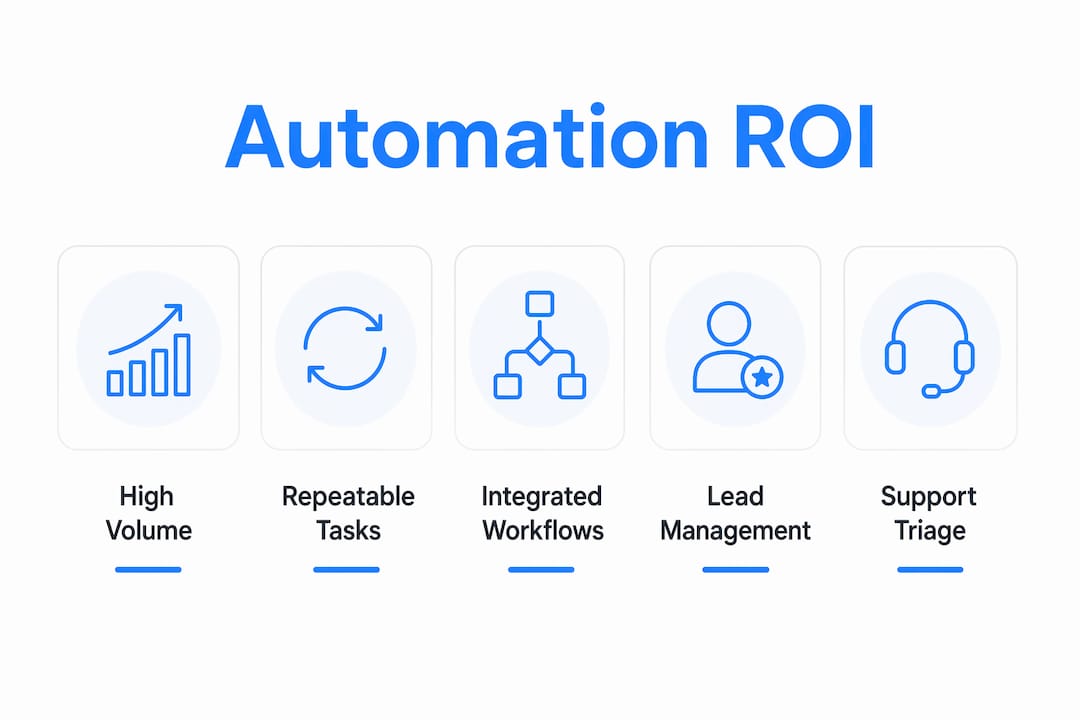
Not every process deserves to be automated first. The highest-return candidates share three traits: they are high-frequency, they follow a predictable pattern, and they currently consume significant founder or team time. Prioritizing based on those criteria keeps you focused on real impact rather than automating for its own sake.
The table below compares the most common early automation targets by effort and payoff:
| Workflow | Automation effort | Payoff | Best tool |
|---|---|---|---|
| Lead capture and CRM update | Low | High | Zapier, HubSpot |
| Support ticket triage | Medium | High | Intercom, Zendesk |
| Invoice and payment follow-up | Low | Very high | Interval-ai |
| Internal reporting | Low | Medium | Google Looker Studio |
| Onboarding email sequences | Low | High | Mailchimp, ActiveCampaign |
Nearly one-third of AI-powered workflows analyzed across 10,000 examples are built around lead management, handling multi-step processes from signups to follow-ups. That concentration reflects where founders feel the most pain: leads fall through the cracks when no one has time to follow up manually.
The critical insight here is that integrated end-to-end workflows outperform isolated task automations. Connecting your lead form to your CRM, then to your email sequence, then to your sales rep's task list creates a system. Automating only the form submission and stopping there creates a dead end.
High-ROI automation candidates are consistently the high-volume, repetitive workflows: lead qualification, support triage, and internal reporting. These are the tasks your team finds boring precisely because they happen constantly, which makes them perfect for automation.
Pro Tip: Score each workflow candidate on two dimensions: how often it happens per week, and how long it takes each time. Multiply those numbers. The highest scores are your first automation targets.
How to implement early automation without common pitfalls
Strategic implementation separates startups that build durable automation from those that waste runway on projects that get abandoned after three months. The failure mode has a name: automation theater. That is when a startup builds an impressive-looking automated system that nobody actually trusts or uses because it produces unreliable outputs.
Follow this sequence to avoid it:
-
Start with clean data inputs. Automations built on reliable data sources, such as CRM records and inbound forms, succeed at a significantly higher rate than those pulling from inconsistent spreadsheets or manual logs. Fix your data quality before you automate.
-
Build minimum viable automations first. A two-step Zap that moves a form submission into your CRM is more valuable than a twelve-step AI agent that you spend six weeks building. Prove the ROI at the simple level before adding complexity.
-
Add human-in-the-loop checkpoints. For any automation that touches customers or money, include a step where a human reviews the output before it goes out. Human-in-the-loop controls prevent the silent failures that cause founders to abandon automation projects entirely.
-
Build observability from day one. Set up logging and alerts so you know when an automation fails or produces unexpected results. A broken automation that runs silently for two weeks does more damage than no automation at all.
-
Expand gradually. Move from single-task automation to connected workflow automation, and only then consider agentic systems. Each level requires more maintenance and more trust in your data quality.
Avoiding automation theater means focusing on repeatable workflows with measurable ROI and scaling gradually. That principle sounds obvious, but most founders skip it because building something complex feels more productive than building something simple that actually works.
Pro Tip: Set a 30-day review date for every new automation. If you cannot measure its impact after 30 days, either the metric is wrong or the automation is not solving a real problem.
How automation shapes lean, scalable startup business models
The role of automation in lean startups goes beyond saving time on individual tasks. It redefines what a startup's cost structure looks like at scale. A traditional startup hires people to handle growth. An automation-first startup writes workflows instead.
Consider what this means in practice:
- A two-person finance team using automated collections, invoicing, and reporting can manage the accounts receivable volume that would normally require four or five people.
- A solo founder running a SaaS product can support hundreds of customers with automated onboarding, in-app messaging, and support triage before hiring a single customer success manager.
- Over 90% of Revenue Operations teams use automation, which signals that the standard for scaling revenue functions no longer includes proportional headcount growth.
The economic impact is direct. Lower headcount means lower burn rate, which extends runway and reduces the pressure to raise at unfavorable terms. Startups that demonstrate automation-driven efficiency also tend to command better valuations because investors can see a path to profitability that does not depend on hiring.
"The most capital-efficient startups in 2026 are not the ones with the best product. They are the ones with the most automated operations."
That cultural shift matters too. When your team knows that software handles the repetitive work, they focus on creative and strategic problems. That focus compounds over time into a genuine competitive advantage.
One risk worth naming: over-automation without escalation paths creates brittleness. If every customer interaction is automated and something goes wrong, there is no human to catch it. Build clear escalation triggers into every customer-facing workflow so that edge cases reach a real person quickly.
Key takeaways
Early automation gives startups operational leverage that directly reduces burn rate, extends runway, and accelerates growth without proportional hiring.
| Point | Details |
|---|---|
| Automate high-frequency workflows first | Lead management, support triage, and payment follow-up deliver the fastest measurable returns. |
| Connect workflows end-to-end | Integrated automations from lead to close outperform isolated single-task automations every time. |
| Start simple, prove ROI, then expand | Minimum viable automations reduce wasted runway and build team trust before complexity increases. |
| Add human checkpoints for critical steps | Human-in-the-loop controls prevent silent failures in customer-facing and financial workflows. |
| Automation reduces burn rate structurally | Automation-first startups scale revenue without proportional headcount, extending runway and improving valuations. |
Why I think most founders automate too late and too timidly
The conventional wisdom says to wait until a process is "broken enough" to justify automating it. I think that advice is wrong for early-stage startups, and here is why.
By the time a process feels broken, you have already lost weeks of founder time, made errors that damaged customer relationships, and built a team habit of doing things manually. Habits are harder to change than workflows. When you automate early, you set the expectation from the start that software handles the repetitive work and people handle the judgment calls.
The founders I have seen struggle with automation usually make one of two mistakes. The first is building something too complex before they understand the process well enough. The second is automating a process that was never clearly defined in the first place. Both mistakes are avoidable if you map the process manually before you touch any tool.
The most underrated benefit of early automation is what it does to your hiring decisions. When you know exactly which tasks are automated, you hire for judgment and creativity rather than capacity. That changes the profile of your team and the culture you build.
AI agents and tools like Zapier, Make, and n8n are genuinely accessible to non-technical founders in 2026. You do not need an engineering team to build a lead management workflow or an automated payment follow-up sequence. Start with one workflow, measure it for 30 days, and let the results tell you where to go next. The founders who build this habit early are the ones who reach Series A with lean, defensible operations.
— Tyler
How Interval-ai helps startups automate collections from day one
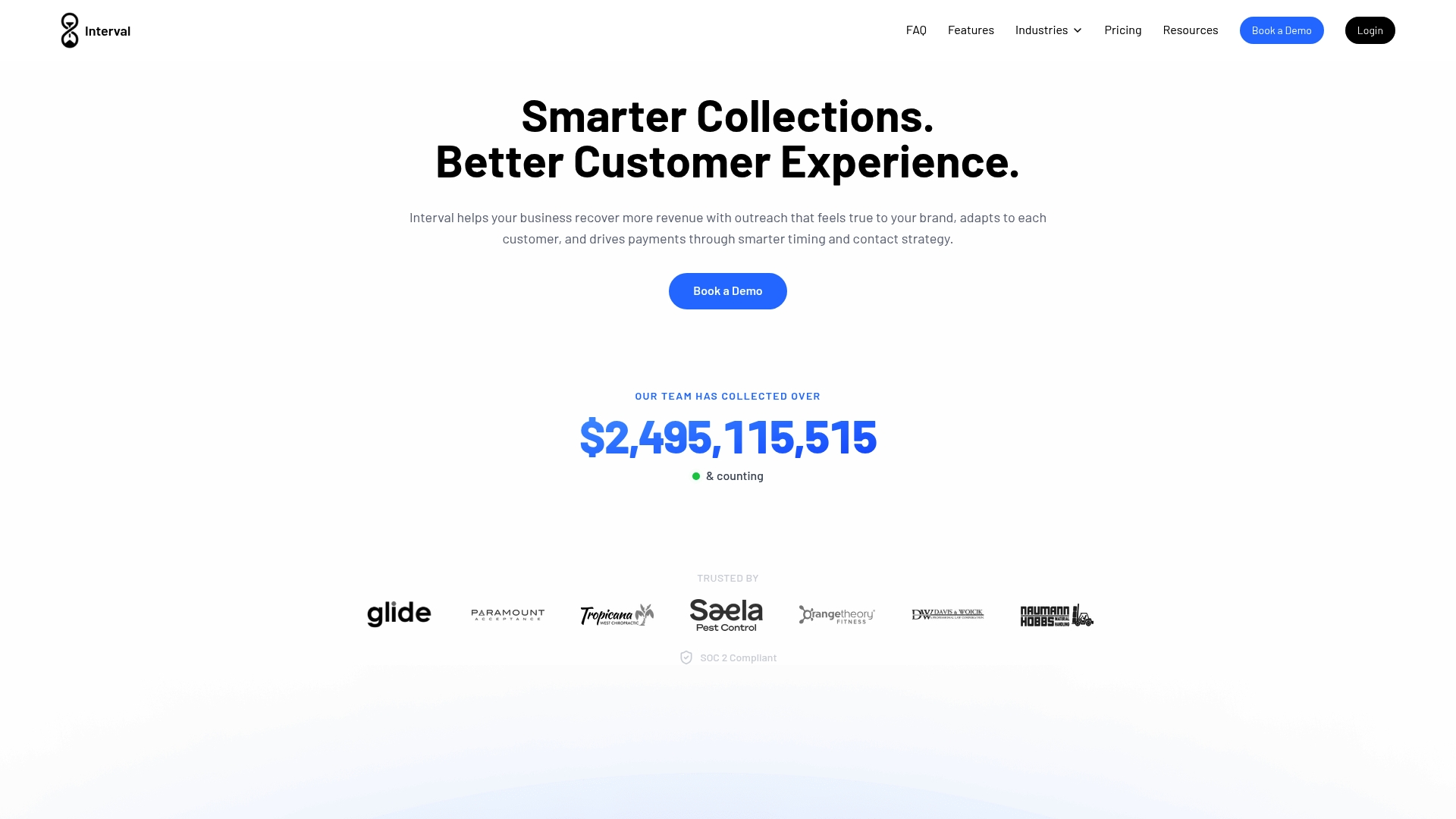
One of the highest-ROI workflows any startup can automate early is accounts receivable. Overdue payments drain cash flow and consume founder time that should go toward growth. Interval-ai is built specifically for this problem. It uses historical payment data to tailor outreach strategies across multiple channels, recovering overdue payments without additional staffing. Clients report reducing days to payment by over 30 days and saving thousands in payroll costs. If you are a founder looking to protect cash flow and free your team from manual collections work, Interval-ai gives you an automated, brand-consistent solution that scales with your business from the earliest stage.
FAQ
Why do startups need automation early rather than later?
Early automation prevents manual habits from forming and gives startups operational leverage before growth demands more headcount. Automation-first startups reduce burn rate and scale faster with fewer resources.
What are the signs your startup needs automation now?
If your team repeats the same data entry, follow-up, or reporting tasks more than five times per week, those workflows are ready to automate. High-frequency, predictable tasks are the clearest signal.
Which automation tools work best for early-stage startups?
Zapier, Make, and n8n are the most accessible no-code workflow tools for founders. For specific functions, HubSpot handles lead management, Intercom handles support triage, and Interval-ai handles collections and payment follow-up.
How does automation drive growth in lean startups?
Automation replaces headcount for repetitive tasks, which lowers burn rate and extends runway. Over 90% of Revenue Operations teams use automation to scale revenue functions without proportional hiring.
When is the right time to implement automation at a startup?
The right time is before the process becomes a bottleneck, not after. Start with one high-frequency workflow, prove the ROI in 30 days, and expand from there using a gradual automation approach that avoids wasted runway on unproven systems.
